On the night of the full moon, the old town of Hội An turns off its lights.
Shops dim their neon. Streetlamps go dark. And in their place, hundreds of silk lanterns, red, gold, green and violet, glow along the streets and over the river. Children sell paper lanterns with candles inside, and people set them floating on the Thu Bồn River, making wishes as they drift away into the dark.
You step onto a small wooden boat, and the boatwoman rows you slowly out among the floating lights, with the old merchant houses glowing gold along the bank. It’s one of the most romantic evenings in Asia.
A port of many nations
From the 15th to the 19th centuries, Hội An was one of the busiest trading ports in Southeast Asia. Ships came from China, Japan, India, the Netherlands and Portugal to buy silk, porcelain, spices and tea. Japanese and Chinese merchants built their own neighborhoods, temples and assembly halls.
Then the river silted up, trade moved to Đà Nẵng, and Hội An was left behind, which is why it survived. Its old town, with more than a thousand historic buildings, is a UNESCO World Heritage Site.
What to see
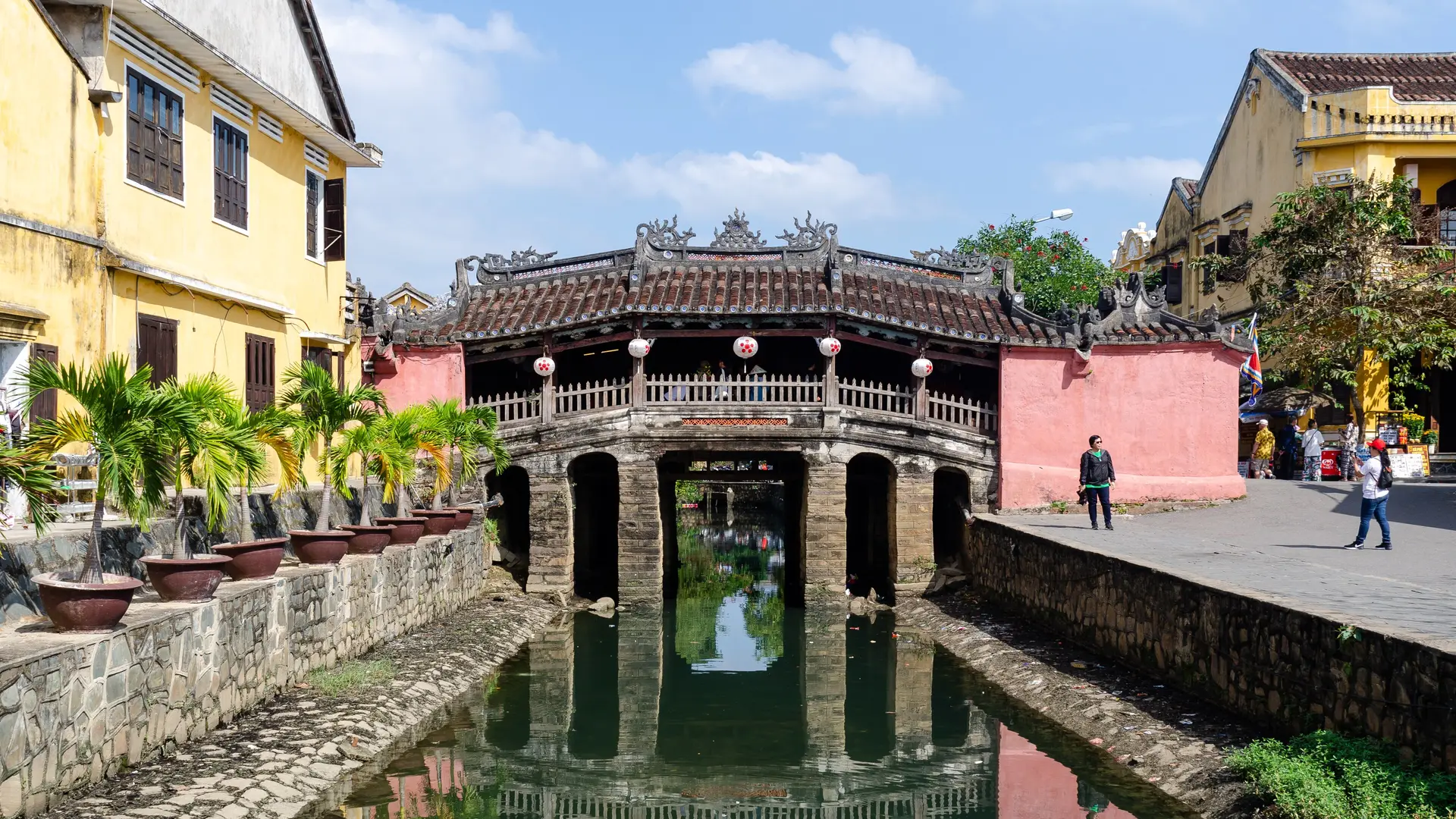
The Japanese Covered Bridge. Built in the late 1500s by the Japanese community, a small wooden bridge with a roofed walkway and a tiny temple inside. It’s the symbol of Hội An, and appears on Vietnam’s 20,000-dong banknote.
The assembly halls. Built by Chinese communities from different provinces, with dragons, incense coils and colorful courtyards. The Phúc Kiến (Fujian) Assembly Hall is the grandest.
The old merchant houses, such as Tân Ký, with dark wooden interiors, carvings and family altars, still lived in by the same families for generations.
The old town ticket gives you entry to a selection of these sights and helps fund their preservation.
Lanterns, tailors and food
Lanterns. Every evening, the streets and riverbanks glow with silk lanterns. You can take a lantern-making class and take one home.
Tailors. Hội An is famous for its tailors. Choose fabric, show a photo or pick a design, and have a suit, dress or coat made in a day or two, with fittings. Shoes too.
Food. Try:
- Cao lầu: chewy noodles with pork and greens, found only in Hội An, traditionally made with water from an ancient well.
- Bánh mì: Hội An’s versions are famous across Vietnam.
- White rose dumplings and mì Quảng noodles.
- A cooking class that starts with a market visit and a basket-boat ride in the coconut palms.
Beyond the old town
- Cycling through rice fields and vegetable villages like Trà Quế.
- An Bàng and Cửa Đại beaches, just a short bike ride away.
- Mỹ Sơn, about an hour away: the ruins of Hindu temples built by the Cham kingdom between the 4th and 13th centuries, in a jungle valley. Go early in the morning.
- The Marble Mountains and the beaches of Đà Nẵng, about 45 minutes north.
When to go
February to April is ideal: warm and dry. May to August is hot. September to December is the rainy season, and in October and November heavy rains can flood the old town, sometimes with boats in the streets.
The honest bits
Hội An is very popular, and the old town can feel crowded and commercial in the evenings, with boats and lantern sellers everywhere. Some tailors are pushy. But get up early, cycle through the empty yellow lanes as the shopkeepers open their shutters and the river mist lifts, then come back for the lanterns at night.
Hội An: questions people ask
When is the Hội An lantern festival?
On the evening of each full moon (the 14th day of the lunar month), the old town turns off many electric lights, and lanterns and candles light the streets and river. Lanterns glow every evening too.
Can you get clothes made in Hội An?
Yes. Hội An is famous for tailors who can make suits, dresses and shoes in a day or two. Allow time for at least one fitting, and choose a well-reviewed shop.
When is the flood season in Hội An?
Roughly October to November, when heavy rain can flood the old town streets. February to April is usually the best time to visit.