Every year, the rangers at Hawaiʻi Volcanoes National Park receive packages in the mail. Inside are rocks: small pieces of black lava, often with a note of apology. A typical one reads something like this:
“I’m sorry. I took this from your park. Since then I’ve broken my leg, lost my job and my dog ran away. Please return it to Pele.”
According to legend, Pele, the Hawaiian goddess of fire and volcanoes, doesn’t like people taking pieces of her home. Whether it’s a curse or just bad luck, enough people believe it to keep the post office busy.
Pele lives in Kīlauea. And she’s one of the most active goddesses on Earth.
A volcano that never sleeps for long
Kīlauea, on the south-east side of the Island of Hawaiʻi (the “Big Island”), is one of the most active volcanoes in the world. It’s a shield volcano, with gentle slopes built by countless flows of runny lava, rising on the flank of its giant neighbor, Mauna Loa.
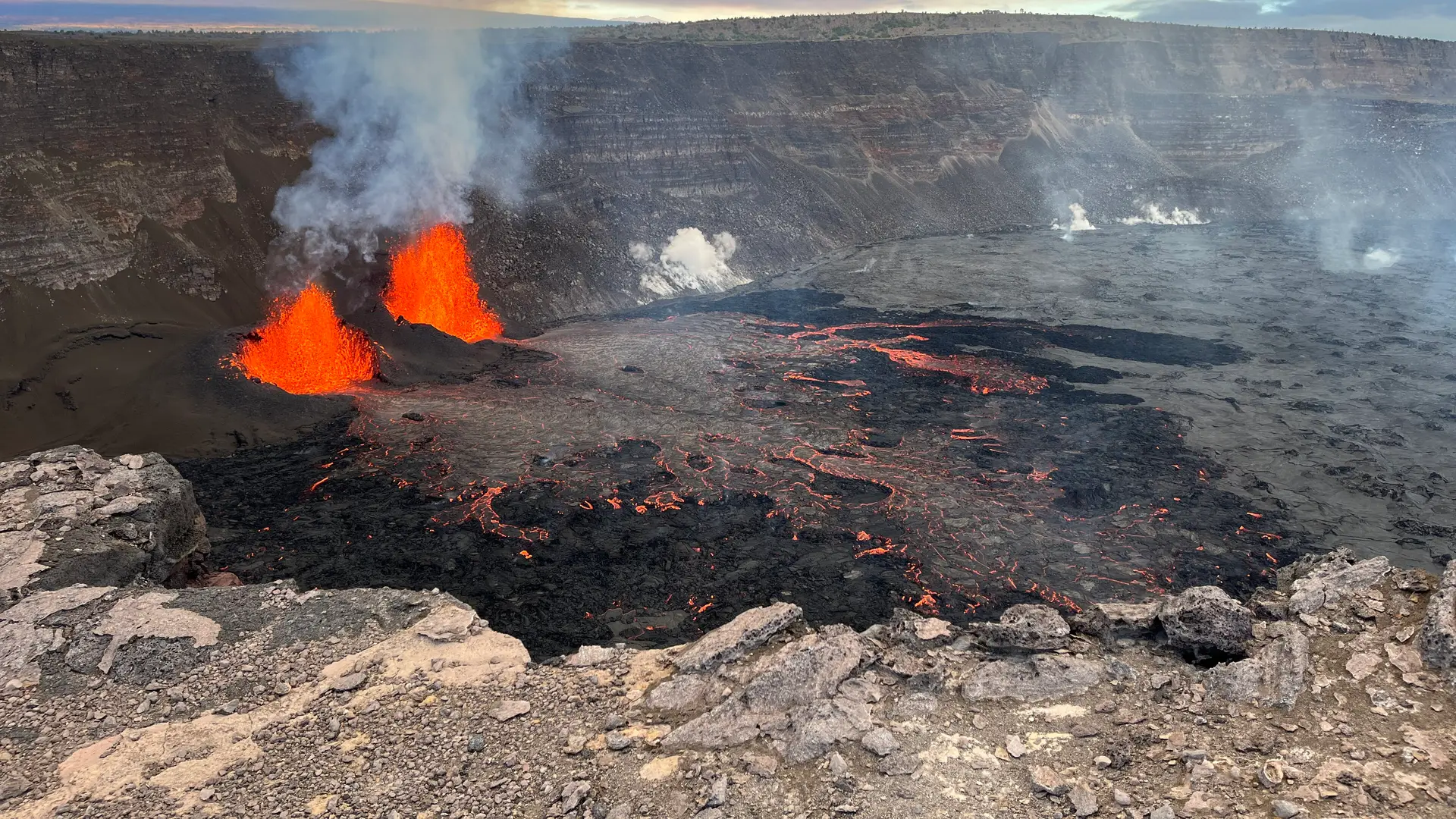
From 1983 to 2018, Kīlauea erupted almost continuously, sending lava rivers down to the sea and building new land. In 2018, a dramatic eruption opened fissures in the lower Puna district, destroying hundreds of homes, while the summit crater collapsed and sank by hundreds of meters. Since then, the volcano has erupted again many times, sometimes with a glowing lava lake, sometimes with spectacular lava fountains in the summit crater.
Its main crater, Halemaʻumaʻu, is traditionally Pele’s home.
Seeing the volcano
Whether there’s visible lava depends on what Kīlauea is doing when you visit. Check the National Park Service and USGS updates before you go.
When the summit is erupting, the best views are from the rim viewpoints, such as Uēkahuna, Kīlauea Overlook and Keanakākoʻi. Go after dark, when the glow of the lava lights up the clouds and steam, and the crater turns red and orange. It’s unforgettable. Arrive early to get parking, and dress warmly: the summit is about 1,200 meters high, and nights are cold.
What else to do
Kīlauea Iki trail. A 6-kilometer loop down through rainforest and across the floor of a crater that was a boiling lava lake in 1959, now a cracked, steaming black surface you can walk across. It’s one of the best day hikes in the national park system.
Nāhuku (Thurston Lava Tube). A cave-like tunnel formed when the surface of a lava flow cooled and hardened while molten lava kept flowing inside, then drained out. Walk through it, surrounded by ferns.
Chain of Craters Road. A scenic road that drops about 1,000 meters from the summit to the coast, past craters, old lava flows and petroglyphs at Puʻu Loa, ending at a sea arch where the cliffs meet the Pacific.
Steam vents and sulfur banks, near the visitor center.
Safety
- Follow all closures. Areas can close suddenly because of volcanic activity.
- Volcanic gases (vog) can be a problem for people with heart or breathing conditions, pregnant women, infants and young children.
- Stay on trails: cracks and cliff edges are unstable.
- Don’t take lava rocks. It’s illegal, and Pele may want them back.
Where to stay
The village of Volcano, near the park entrance, has cozy rainforest cabins and B&Bs. Hilo, about 45 minutes away, has more options. There’s also a historic lodge on the crater rim.
The rest of the Big Island
The island has almost every climate on Earth. Stargaze from Maunakea (a sacred mountain and one of the best observatory sites in the world), swim with manta rays at night off Kona, see green sand and black sand beaches, and walk through waterfalls and rainforest on the Hāmākua Coast.
When to go
Kīlauea can be visited year-round. The summit is often cool and rainy, so pack layers whatever the season. What matters most is the current eruption status.
The honest bits
There may be no lava visible when you visit, and popular viewpoints get crowded at night during eruptions. Vog and rain can spoil the views. And it’s a long way from the island’s main resort areas.
But stand on the crater rim at night as the lava lake glows red beneath a cloud of steam lit orange from below, and the ground hums under your feet. It’s a reminder that the islands of Hawaiʻi are still being born, right in front of you.
Kīlauea: questions people ask
Can I see lava at Kīlauea?
It depends. Kīlauea erupts on and off, and sometimes there's a glowing lava lake or fountains in the summit crater, visible from viewpoints. Other times there's no visible lava. Check the National Park Service and USGS updates before you go.
Is it safe to visit Kīlauea?
The park is generally safe when you follow closures and rules. Volcanic gases can affect people with heart or breathing problems, and some areas close during eruptions. Stay on trails and obey signs.
Can I take a lava rock home?
No. It's illegal to remove rocks from the national park, and many Hawaiians consider it disrespectful to Pele. Every year, people mail rocks back saying they've had bad luck.