It’s 5:30 in the morning, still dark, and the street is completely silent.
Then, from the end of the road, they come: a long, slow line of monks in saffron robes, barefoot, from the youngest novices of about ten to old men with shaved heads, each carrying a lidded alms bowl. Along the pavement, local women kneel on small mats with baskets of warm sticky rice. As each monk passes, a woman places a small ball of rice into his bowl. No one speaks. The robes glow orange in the first grey light.
This is Tak Bat, the morning alms giving, and it has happened here every day for centuries.
A royal city on two rivers
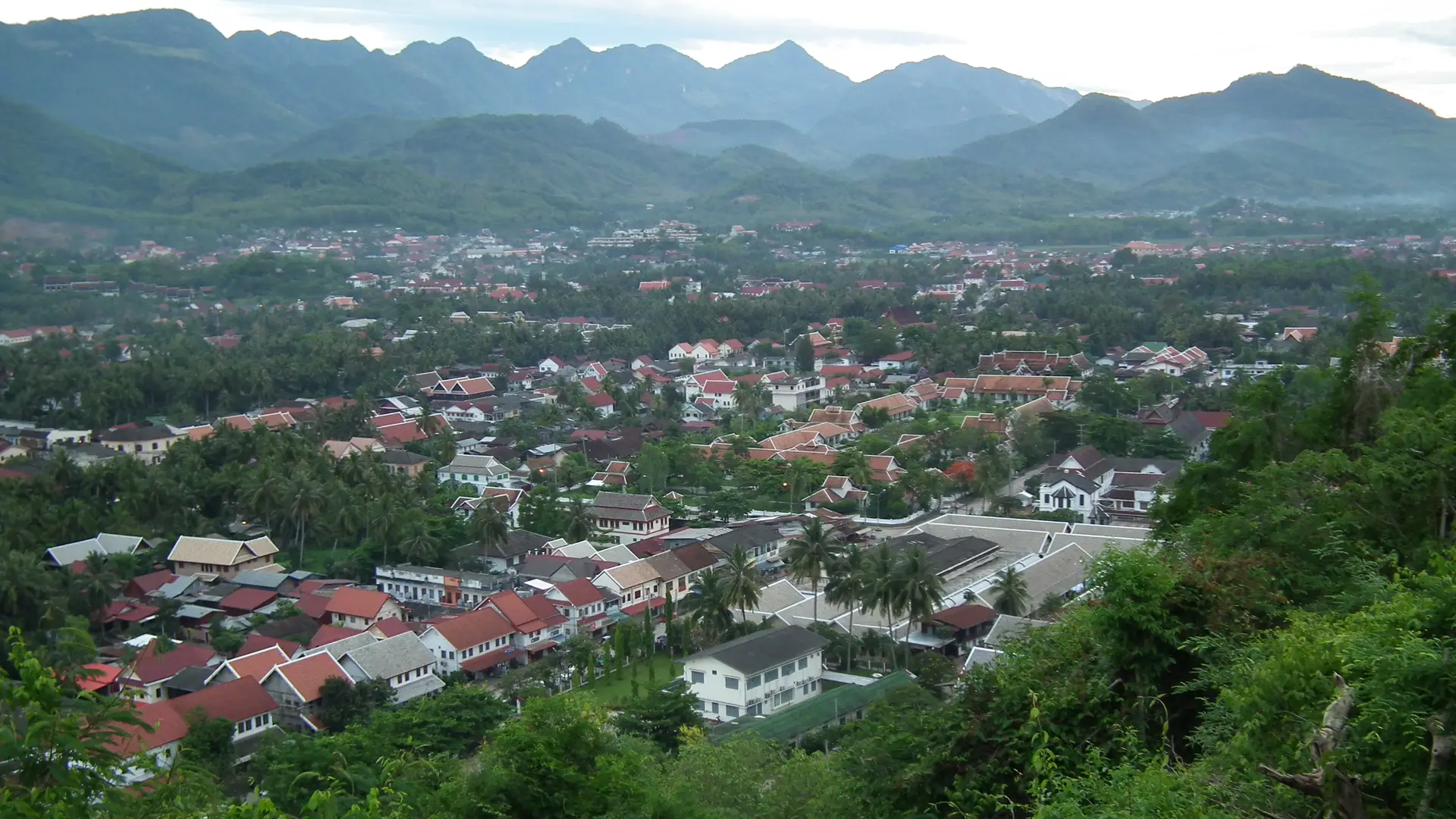
Luang Prabang sits on a small peninsula where the Nam Khan river flows into the Mekong, surrounded by green mountains in northern Laos. It was the royal capital of the kingdom of Lan Xang, “the land of a million elephants,” and later home to the kings of Laos.
The town is a gentle mix of gilded Buddhist temples, wooden Lao houses, and French colonial villas with shutters and balconies. There are dozens of temples, and hundreds of monks live and study in them. In 1995, the whole town became a UNESCO World Heritage Site. There are no tall buildings, little traffic, and a pace of life that slows you down within a day.
Watching the alms giving respectfully
Tak Bat is a sacred religious ritual, not a show. Unfortunately, it has sometimes been disrupted by tourists with cameras. To watch respectfully:
- Stand back, across the street or at a distance. Never block the monks’ path.
- No flash, and don’t push cameras into monks’ faces.
- Stay quiet, and dress modestly.
- Don’t take part unless it means something to you. If you do, buy sticky rice from a proper source, not from street sellers, and ask locals how to do it correctly.
What to see
Wat Xieng Thong. The most beautiful temple in Laos, built in 1560, with sweeping roofs that almost touch the ground. On the back wall of the main hall, a glittering glass mosaic shows the tree of life, in colored glass on a deep red background.
Mount Phousi. A hill in the middle of town with a golden stupa on top, reached by about 330 steps. It’s the classic spot for sunset over the Mekong and the mountains. It gets crowded, so arrive early.
The Royal Palace Museum, the former home of the Lao kings, and Haw Pha Bang, a shrine for the sacred Phra Bang Buddha that gave the city its name.
The night market, along the main street every evening, with textiles, lanterns and street food.
Around Luang Prabang
Kuang Si Falls. About 45 minutes away, a series of waterfalls tumbles through the forest into terraced pools of milky turquoise water. You can swim in some of the lower pools. At the entrance, a sanctuary cares for Asiatic black bears rescued from the illegal wildlife trade.
The Pak Ou Caves. A boat trip up the Mekong leads to two caves in a cliff above the river, filled with thousands of Buddha statues, left by pilgrims over centuries.
Cooking classes, weaving villages, and kayaking on the Nam Khan.
Food
Try khao soi (Luang Prabang’s version, a noodle soup with tomato and pork sauce), or lam (a spicy stew with herbs and wood), khai pen (crispy river weed with sesame), Mekong fish, and fresh baguettes, a French legacy, for breakfast.
Getting there
- By train: the Laos–China Railway runs from Vientiane in about 2 hours.
- By air: flights from Bangkok, Hanoi, Siem Reap and other hubs.
- By slow boat: a two-day trip along the Mekong from the Thai border at Huay Xai, stopping overnight in Pakbeng.
When to go
November to February is cool and dry, the most comfortable time. March–April can be hot and hazy from agricultural burning. Lao New Year (Pi Mai), in mid-April, is celebrated with water fights in the streets. The rainy season (May–October) brings lush scenery and fewer tourists.
The honest bits
Luang Prabang has become popular, and the alms giving can be crowded with tourists. Mount Phousi at sunset is packed, and the town can feel like it’s run for visitors in places.
But get up early, find a quiet corner far from the main road, and watch the line of monks pass in silence as the sky turns pink over the temple roofs. You’ll go home talking more quietly than you arrived.
Luang Prabang: questions people ask
How should I watch the alms giving in Luang Prabang?
Quietly, from across the street or at a distance. Don't block the monks' path, don't use flash, and don't take part unless it's meaningful to you. If you do, buy sticky rice from a proper source, dress modestly and follow local guidance.
How do you get to Luang Prabang?
By air, or on the Laos–China Railway from Vientiane (about 2 hours). A slow boat along the Mekong from the Thai border takes two days and is a memorable trip.
When is the best time to visit Luang Prabang?
November to February for cool, dry weather. March and April can be hazy from agricultural burning. The rainy season (May–October) is green and quieter.