You arrive in fog. That’s the usual way.
The first bus up the switchbacks from Aguas Calientes leaves in the dark, and by the time you’re through the gate the mountain is wrapped in white. You climb some terraces, find a spot near the old guardhouse, and wait with your hands in your pockets. A llama wanders past as if it owns the place, which it more or less does.
Then the cloud starts to pull apart, a bit at a time. First the green tooth of Huayna Picchu appears, then the gray walls below it, then the whole city, sitting on a ridge between two sheer drops with the Urubamba River roaring 450 meters below. It looks like it can’t possibly be real.
A royal estate, abandoned and forgotten
Machu Picchu was built around 1450 for the Inca emperor Pachacuti, the ruler who turned a small kingdom around Cusco into the largest empire in the Americas. It wasn’t a lost capital or a hidden refuge. It was most likely a royal estate, a country palace with temples, a mountain retreat for the emperor and his household.
It was lived in for less than a century. When the Spanish arrived in the 1530s, smallpox and civil war had already broken the empire, and the estate was abandoned. The Spanish never found it. That’s why it survived when so many Inca temples were torn down to build churches.
Local farmers always knew it was there. In 1911 the American explorer Hiram Bingham was led up the mountain by a farmer named Melchor Arteaga, and found two families already living among the terraces and growing crops. Bingham’s photos in National Geographic made it world-famous, and he called it a “lost city.” It had only been lost to outsiders.
What you’re looking at
The Inca built without mortar. In the finest temples the granite blocks are cut so precisely you can’t slip a knife blade between them. Walls lean slightly inward and windows are trapezoid-shaped, which helps them survive earthquakes. Walls like these have stayed standing through shakes that brought down Spanish buildings in Cusco.
Look for:
- The Temple of the Sun, a curved tower built over a natural rock. Its window lines up with the sunrise at the June solstice.
- The Intihuatana, a carved stone often called the “hitching post of the sun,” probably used for astronomy.
- The Temple of the Three Windows, looking east across the mountains.
- The terraces, hundreds of them. They held the mountain together, drained the heavy rains and grew food.
Around 60% of the construction is actually underground: foundations and drainage that keep the city from sliding off its ridge.
Tickets and circuits: read this first
Machu Picchu runs on a strict system:
- Daily visitor numbers are capped, and every ticket has a timed entry slot.
- You follow a fixed one-way circuit. Each circuit covers a different route and area, so choose carefully. If you want the classic postcard view, make sure your circuit includes the upper terraces.
- Add-on hikes such as Huayna Picchu, Machu Picchu Mountain or the Sun Gate have their own tiny quotas and sell out first.
- A standard adult ticket for foreign visitors costs roughly 150 soles. Buy only from the official Ministry of Culture site or a reputable agency, and carry the same passport you booked with.
Rules change fairly often, so check the official site when you book.
Getting there
There’s no road all the way to Machu Picchu. Most visitors:
- Fly to Cusco.
- Take a train (PeruRail or Inca Rail) from Cusco/Poroy or Ollantaytambo to Aguas Calientes, the town at the foot of the mountain. The ride follows the river through a deepening gorge and is gorgeous. Sit on the left heading there.
- Ride the bus up the switchbacks (about 25 minutes), or walk up the steep stairs in an hour or so.
Or walk the Inca Trail: four days over high passes and through cloud forest, passing ruins you can only reach on foot. You arrive at the Sun Gate at dawn on the last day and look down on the city for the first time. It takes permits and a licensed operator, it fills months ahead, and it closes every February. Alternatives such as the Salkantay trek or a one-day Inca Trail are also lovely.
Altitude and timing
Cusco sits at about 3,400 meters, high enough to give many people headaches, breathlessness and bad sleep for the first day or two. A good plan is to land in Cusco and head straight down to the Sacred Valley (around 2,800 meters) for two nights. Visit Machu Picchu, and do Cusco at the end once you’ve adjusted.
The dry season (May–September) has the clearest skies, with June to August the busiest. April and October are lovely shoulder months. The wet season runs roughly December to March, with heavy rain in January and February. It’s misty and green and moody, but the trails can be slippery and train lines are occasionally disrupted.
Stay a night in Aguas Calientes so you can be on the first bus up. The difference between 6 a.m. and 11 a.m. is huge.
Huayna Picchu or Machu Picchu Mountain?
Two peaks stand over the ruins, and each has its own small daily quota of permits. Many visitors agonize over which to choose.
Huayna Picchu is the steep green peak in every classic photo. The climb takes about an hour up stone stairs so steep in places that you’re using your hands, with cables to hold and sheer drops just beyond. At the top, perched on Inca terraces that seem to hang in the sky, you look straight down on the city. It’s thrilling. It’s also genuinely scary if you don’t like heights.
Machu Picchu Mountain, on the opposite side, is higher (around 3,000 meters) and longer, about 1.5–2 hours of steady climbing up wide Inca stairs. It’s less vertiginous and much quieter, and from the summit you see the whole city, Huayna Picchu, the river and the Andes in one huge panorama.
If you love a bit of adrenaline, choose Huayna Picchu. If you’d rather sit in peace with the bigger view, Machu Picchu Mountain.
Don’t skip the Sacred Valley
The Sacred Valley of the Incas runs between Cusco and Machu Picchu, and many travelers rush through it. Don’t.
- Ollantaytambo is a real Inca town still laid out on its original street plan, with water channels running beside the lanes and a huge fortress-temple of terraces above it. Stay a night and climb the terraces at sunset.
- Pisac has a colorful market and a hilltop citadel with some of the finest terraces in Peru.
- Moray is a set of giant circular terraces sunk into the earth like an amphitheater. It’s thought to have been an Inca agricultural laboratory, with each level a slightly different temperature.
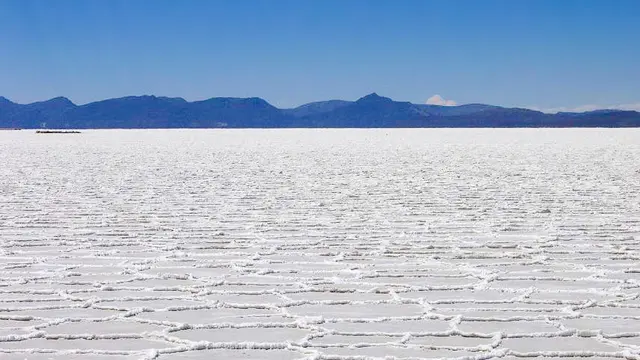
- Maras is a hillside of thousands of shimmering salt pans, fed by a salty spring and worked by local families since before the Incas. In the dry season, they glow white and pink in the sun.
A few days here, at a lower altitude than Cusco, make the perfect gentle start to the trip.
The honest bits
Aguas Calientes is a little charmless: a busy railway town of pizzerias and souvenir stalls, though the riverside hot springs are welcome after a long day. The whole trip is expensive once you add train fares, buses and guides. You will not have the place to yourself. And the rules are strict: no big bags, no drones, no walking poles without good reason, and you can’t double back on your circuit.
None of that matters when the fog lifts. People have been coming up this mountain for almost six hundred years, and it still makes the whole terrace go quiet.
Machu Picchu: questions people ask
How far in advance should I book Machu Picchu tickets?
Entry is capped each day with timed slots, so book as early as you can, ideally two to three months ahead for June–August. Huayna Picchu and Inca Trail permits sell out first, sometimes six months ahead.
What are the Machu Picchu circuits?
Your ticket assigns you a fixed, one-way route through the site, with a set entry time. Different circuits cover different areas, from the classic upper viewpoint to the lower temples. Pick the circuit before you buy, because it decides what you'll see.
Do I need to worry about altitude at Machu Picchu?
Machu Picchu itself sits at about 2,430 meters, lower than Cusco at about 3,400 meters. Most problems happen in Cusco. Spend your first nights lower down in the Sacred Valley, drink lots of water and take it slowly.
Can I hike the Inca Trail to Machu Picchu?
Yes, with a licensed operator and a permit. The classic route takes four days. Permits are limited and the trail closes every February for maintenance. A shorter one-day version also exists.
What's the best month to visit Machu Picchu?
May and September are the sweet spot: dry weather with slightly fewer people than the June–August peak. The rainy season (roughly December to March) brings cloud and mud, but also green landscapes and quieter trails.