Carved above the doorway of a tomb at Hegra, in neat Nabataean letters, there’s a warning.
The tomb, it says, belongs to a particular family, and no one else may be buried in it. Anyone who sells it, rents it, or opens it to put in another body will be cursed by the gods, and must also pay a fine to the king.
It’s 2,000 years old: a legal notice, a curse and a fine, all in one. And it’s still there, sharp and clear, in the middle of the Arabian desert.
Petra’s southern sister
The Nabataeans were the Arab traders who built Petra, in what’s now Jordan. As they grew rich on the incense and spice routes, they built a second great city far to the south, at Hegra (also known as Mada’in Salih), in the north-west of today’s Saudi Arabia.
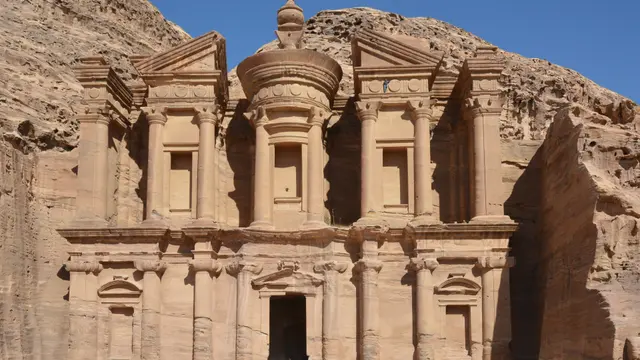
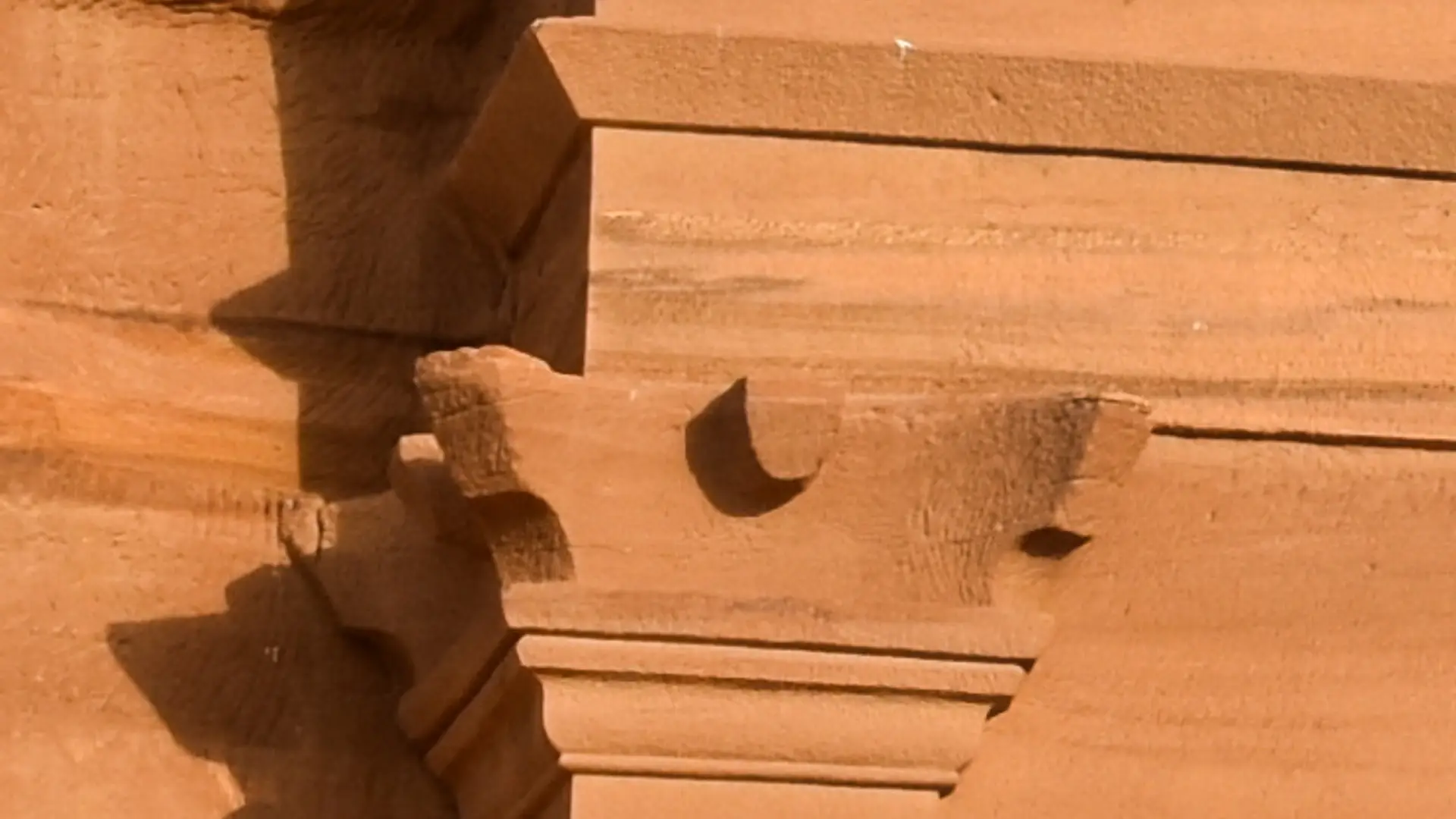
Hegra was a major stop for caravans carrying frankincense, myrrh and spices north from southern Arabia. Its people carved more than a hundred monumental tombs into the sandstone outcrops that rise from the desert plain, mostly in the 1st century BC and 1st century AD. Many have elaborate facades with columns, step-like crowns, eagles and faces, and inscriptions naming their owners.
In 2008, Hegra became Saudi Arabia’s first UNESCO World Heritage Site. For years few outsiders could visit. Since the country opened to international tourism in 2019, it has begun welcoming travelers.
Qasr al-Farid
The most famous tomb at Hegra is Qasr al-Farid, “the Lonely Castle.” It’s carved into a single huge boulder standing completely alone in the sand, with nothing around it. Its facade is four stories high, and the bottom part is unfinished, with chisel marks still visible. The Nabataeans carved their tombs from the top down, and for some reason the work stopped before they reached the ground.
At sunset, as the rock turns orange against a purple sky, it’s one of the most extraordinary sights in the Middle East.
Visiting Hegra
- Visits are by official guided tour only, booked online through the official AlUla tourism website.
- Tours visit several tomb groups by bus or by vintage Land Rover, with stops to walk around and photograph.
- Some tours include sunset or night visits.
AlUla
Hegra is one part of the wider AlUla region, a vast desert valley of sandstone canyons, oases and ancient history.
- AlUla Old Town: a maze of hundreds of mud-brick houses, abandoned in the late 20th century and now partly restored, with cafés and shops.
- Elephant Rock (Jabal AlFil): a huge rock formation shaped exactly like an elephant, with a lounge at its foot for watching the sunset.
- Dadan: the capital of an earlier kingdom, with tombs cut into the cliffs, including the “Lion Tombs.”
- Jabal Ikmah: a canyon of rock inscriptions in ancient languages, sometimes called an “open-air library.”
- Maraya: a concert hall entirely covered in mirrors, reflecting the desert around it. It’s the largest mirrored building in the world.
- Hot-air balloon flights, hiking, stargazing and desert camps.
Practicalities
- Visas: citizens of many countries can apply for a tourist eVisa online or get one on arrival. Check the rules for your nationality.
- Getting there: fly to AlUla International Airport from Riyadh or Jeddah.
- Dress: modest clothing is expected, covering shoulders and knees. Women are not required to wear an abaya as tourists.
- Alcohol is not available in Saudi Arabia.
- Accommodation ranges from desert resorts and luxury tented camps to simpler hotels. Book early in peak season.
- Check your government’s travel advice for Saudi Arabia before you go.
When to go
October to March is best, with warm days and cool nights. Summer temperatures can exceed 45°C. Several cultural festivals take place in winter, with concerts and events in the desert.
The honest bits
Hegra can only be visited on guided tours, which some find restrictive. AlUla can be expensive, and its tourism infrastructure is still developing. Distances between sites are large, so you’ll need tours or a car.
But stand in front of Qasr al-Farid at sunset, alone in the sand, carved by people who crossed this desert with caravans of camels two thousand years ago and never finished their work.
Hegra (AlUla): questions people ask
Can you visit Hegra independently?
No. Visits are by official guided tour only, booked in advance through the official AlUla tourism channels. Tours run by bus or vintage Land Rover between the main tomb groups.
Do I need a visa to visit Saudi Arabia?
Citizens of many countries can apply for a tourist eVisa online or get a visa on arrival. Check current rules for your nationality before booking.
Is Hegra like Petra?
Both were built by the Nabataeans. Petra is larger and set in canyons. Hegra's tombs stand on isolated rocks in open desert, and it's far less crowded.