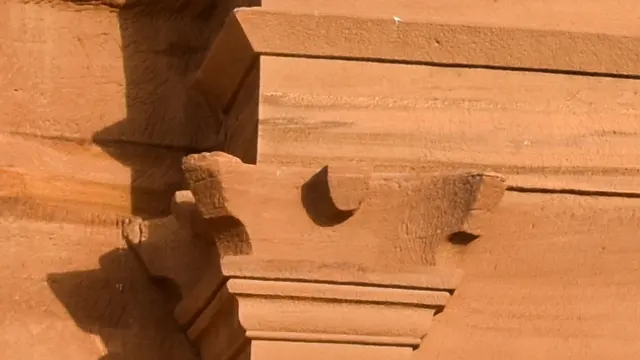
The walls close in first.
You’re walking down the Siq, a crack in the mountain about 1.2 kilometers long. In places it narrows so much you could almost touch both sides. The rock above you is striped with pink, ochre and violet like sliced cake. It’s cool and shadowed. Your footsteps echo. Somewhere ahead a horse cart rattles. You’ve seen the pictures. You know what’s coming. It doesn’t help.
Then the gap ahead turns a soft, impossible pink, and through that sliver you catch the first columns of Al-Khazneh, the Treasury, glowing in the sun. Everybody stops. Everybody. Some people laugh out loud.
Who built a city inside a mountain?
The Nabataeans were Arab traders who grew rich on the incense routes, moving frankincense and myrrh, spices and silk between Arabia, Egypt and the Mediterranean. Petra was their capital and their warehouse, and, judging by the hundreds of carved tombs, their great statement to the gods and the neighbors.
They were also brilliant water engineers. In a desert that sees little rain, they built dams, cisterns and channels cut along the walls of the Siq. You can still trace them as you walk. At its peak the city may have held around 20,000 people, with gardens, fountains and pools.
The Romans took over in AD 106. Trade routes moved, a major earthquake struck in 363, and slowly the city emptied. Local Bedouin families kept living in the caves for centuries.
In 1812 a Swiss traveler named Johann Ludwig Burckhardt, dressed as a scholar called Sheikh Ibrahim, talked his way in by claiming he’d vowed to sacrifice a goat at the tomb of Aaron on the mountain above. He saw the Treasury, kept his cover and wrote the place back into Western maps. Then came the poets. “A rose-red city half as old as time”, John William Burgon called it, though he’d never been.
What to see (and in what order)
The Treasury. It’s not a treasury. It was probably a royal tomb. The name comes from a Bedouin legend that a pharaoh’s gold was hidden in the urn at the top, and if you look closely you’ll see the urn is pocked with old bullet holes from people trying to break it open. Go back late in the day too, when the color deepens.
The Street of Facades and the Theater. Rows of tombs carved into the cliff, and a theater cut into the rock that held several thousand people.
The Royal Tombs. Climb up for the Urn Tomb and the Silk Tomb, whose rock swirls with color like marbled paper.
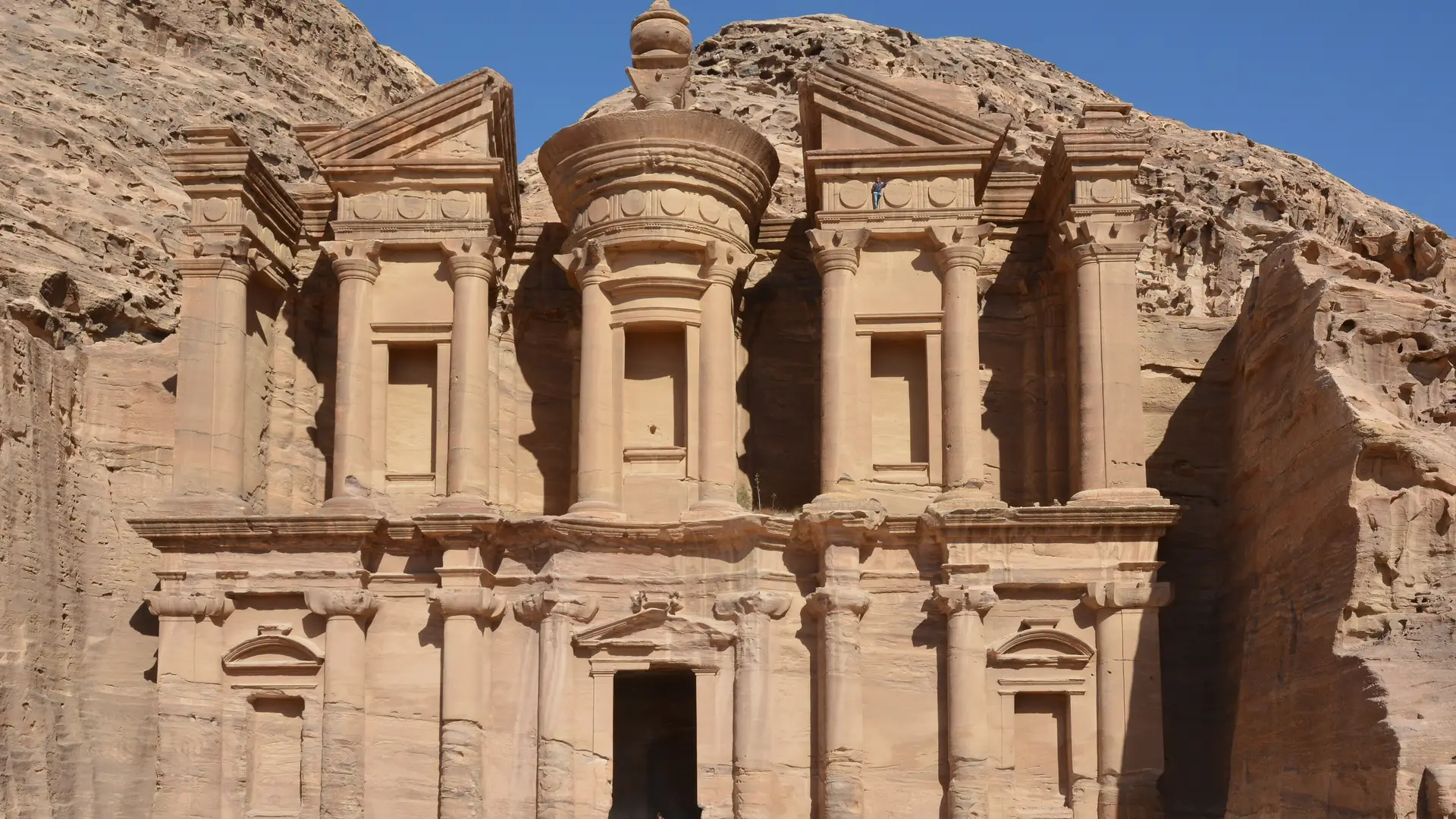
The Monastery (Ad Deir). This is the one that makes the trip. About 800 rock-cut steps lead up the mountain to a facade even bigger than the Treasury’s, and there are usually far fewer people. A tea stall faces it. Sit there with a sweet sage tea and watch the light change. Then walk five minutes further to the viewpoints over the Wadi Araba.
The High Place of Sacrifice. A quieter trail up to an ancient altar with sweeping views, which comes back down past lovely, little-visited tombs.
The Back Trail. Fit walkers can come in the “back way” from Little Petra, a gorgeous four-hour hike that arrives at the Monastery from above. Take a local guide.
Petra by Night
A few nights a week (traditionally Monday, Wednesday and Thursday, but check), the Siq is lined with candles in paper bags and the square before the Treasury becomes a sea of flickering lights. You walk down in hushed groups, sit on mats, drink tea, and listen to a Bedouin musician play the rababa. It’s a bit of a show, and it’s often crowded. But walking out up the dark Siq under a sky full of stars is among the most romantic things you can do in the Middle East.
Tickets and the Jordan Pass
If you’ll spend at least one night in Jordan, Petra costs roughly 50 JD for one day, 55 JD for two and 60 JD for three. Day-trippers from Israel or Egypt who don’t stay overnight pay considerably more.
The Jordan Pass bundles your tourist visa fee with Petra entry and dozens of other sites, including Jerash and Wadi Rum. If you’re flying into Jordan and staying three or more nights, it almost always pays for itself. Buy it online before you arrive.
When to go
Spring (March to May) and autumn (September to November) are best: warm days, cool nights. Summer is very hot in the exposed areas, and the Monastery climb at midday is punishing. Winter is cool, sometimes rainy, occasionally snowy, and blissfully quiet.
Every day, be at the gate at opening, around 6 a.m. Walk the Siq while it’s empty and you’ll have the Treasury almost to yourself for half an hour. Big groups arrive from about 9 a.m.
Where to stay
The town outside the gate is Wadi Musa. Stay within walking distance of the entrance so you can get in early and come back in the evening. A few lodges in the hills nearby, and the Bedouin camps of Little Petra, offer a quieter, starrier night. Many travelers then head south to Wadi Rum for a night in a desert camp. Do it if you can.
A two-day plan that works
Day one. Through the gate at 6 a.m. Walk the Siq slowly while it’s still in shadow, and give yourself time at the Treasury before the crowds. Continue down the Street of Facades to the Theater, then climb to the Royal Tombs while the light’s still kind. Have lunch near the Great Temple and the restaurant area at the bottom of the main valley. Then, in the cooler afternoon, climb the steps to the Monastery and stay up there for sunset. Walk out in the soft evening light. Your legs will tell you all about it at dinner.
Day two. Back to the Treasury very early. It’s a different place with nobody there. Then take the trail up to the High Place of Sacrifice, follow it down the far side past the Lion Fountain and the Garden Tomb, and have tea with a Bedouin family at one of the little stalls. In the afternoon, head to the viewpoint above the Treasury, reached by a separate trail from the Royal Tombs side with a local guide. It’s the photo you’ve seen on Instagram. Petra by Night, if it’s on, finishes the day.
Little Petra and the road to Wadi Rum
Fifteen minutes’ drive north of the main site, Little Petra (Siq al-Barid) is a miniature version: a short canyon with carved houses, cisterns and stairs, believed to have been a suburb where caravans stopped to trade. It’s free to visit, rarely busy, and holds a surprise. Inside one small chamber, the Painted House, a ceiling fresco of vines, birds and cupids has survived for two thousand years.
Then go south. About two hours from Petra, Wadi Rum is a desert of red sand and huge sandstone mountains that has stood in for Mars in more than one Hollywood film. It was also the stage for T.E. Lawrence’s adventures in the Arab Revolt. Bedouin guides take you out in old pickup trucks to natural rock bridges, canyons with ancient inscriptions and dunes for sunset. Then you sleep in a camp: a simple tent, or a bubble tent with a clear roof, under more stars than you’ve ever seen. Pair Petra and Wadi Rum and you have one of the great short trips in the world.
The honest bits
Animal welfare at Petra has been a real concern. You’ll be offered donkey and camel rides constantly, including up the Monastery steps. Many visitors choose to walk, and it’s worth considering. Touts are persistent, but they’re usually friendly and take a polite no. And you will walk a lot, easily 15–20 kilometers on a full day. Wear proper shoes.
Only a fraction of Petra has been excavated. Archaeologists are still finding new tombs, houses and even a huge platform hidden under the sand, spotted by satellite in 2016. Some of the city’s secrets haven’t been found yet.
Petra: questions people ask
How many days do you need in Petra?
Two days is ideal. Day one: the Siq, the Treasury, the Street of Facades, the Royal Tombs and the climb to the Monastery. Day two: the High Place of Sacrifice trail and a return to the Treasury at quiet times. One very long day is possible but rushed.
How much does it cost to enter Petra?
For visitors staying overnight in Jordan, roughly 50 JD for one day, 55 JD for two and 60 JD for three. Day-trippers who don't stay overnight in Jordan pay much more. The Jordan Pass, which includes your visa and Petra entry, is usually the best deal.
What is Petra by Night?
A few evenings a week, the Siq and the square in front of the Treasury are lit with around 1,500 candles. Visitors walk down in near silence and listen to Bedouin music and stories. It needs a separate ticket.
How hard is the climb to the Monastery?
There are about 800 rock-cut steps, and the climb takes 40–60 minutes at a steady pace. It's steep but well within reach of most reasonably fit people. Go up in the morning shade or the late afternoon.
Is Petra safe to visit?
Petra and Jordan's main tourist route are generally considered safe and welcoming, and tourism is well established. As anywhere, check your government's current travel advice before you go.