Every winter, from about January to April, the cod come back to Lofoten.
They’ve been doing it for thousands of years: great shoals of Arctic cod, called skrei, swimming down from the Barents Sea to spawn in the waters around the islands. And for more than a thousand years, fishermen have come to meet them. The fish are gutted, tied in pairs and hung on huge wooden racks along the shore, where the cold, dry Arctic wind dries them over months into stockfish, so hard they can last for years. Viking traders sold them across Europe.
Drive through Lofoten in spring and you’ll see the racks everywhere, thousands of fish swaying in the wind, against a backdrop of snowy peaks and turquoise water. It’s one of the strangest and most beautiful sights in the north.
Mountains from the sea
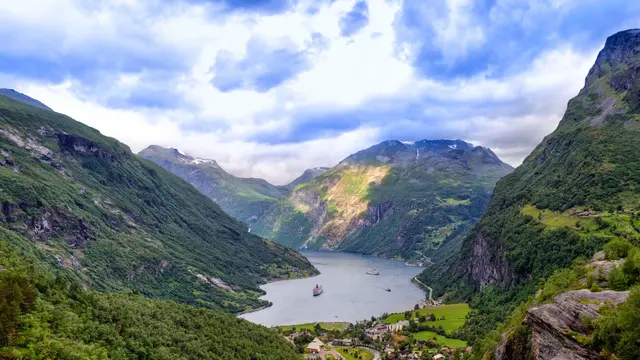
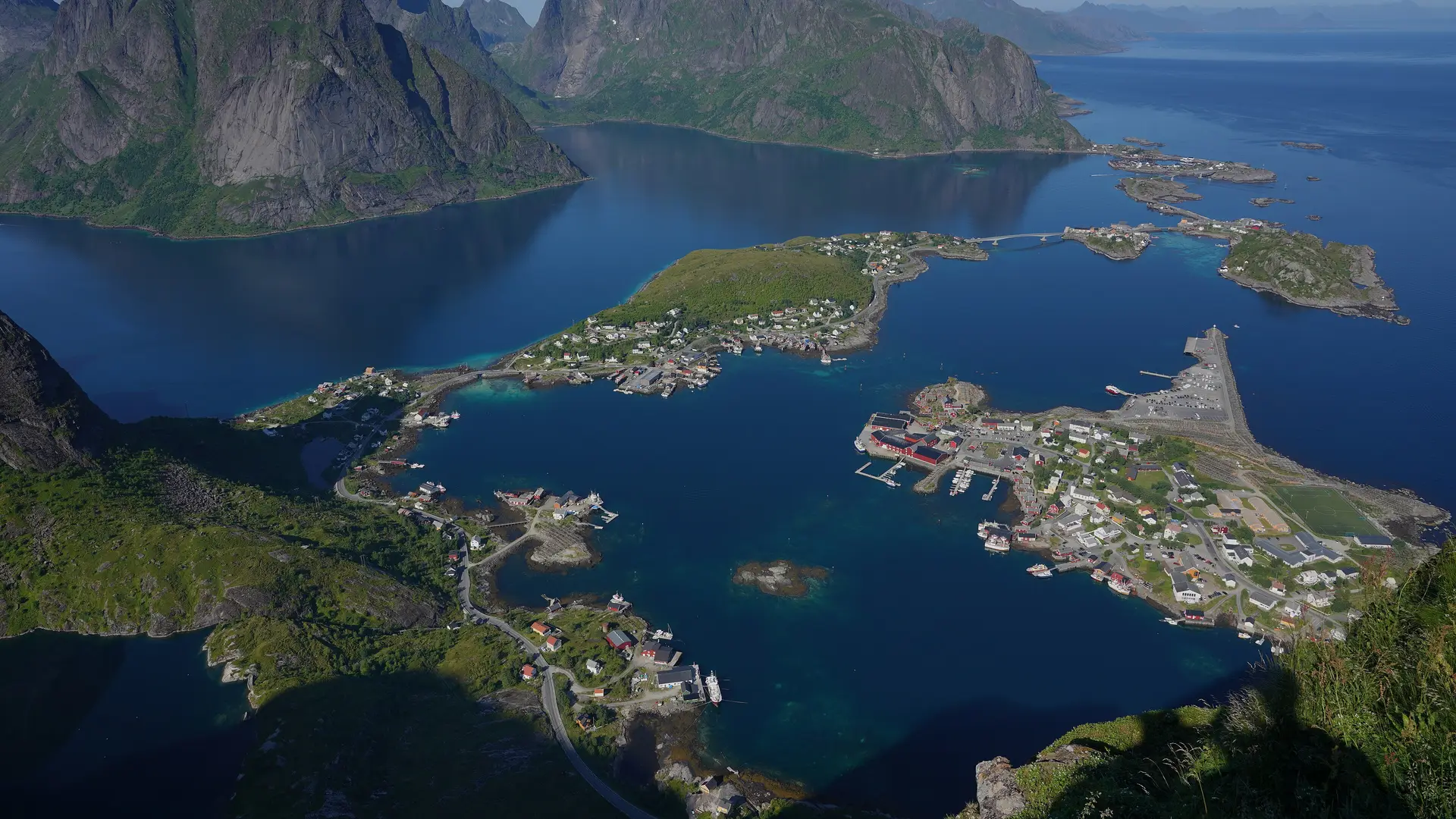
The Lofoten Islands stretch out into the Norwegian Sea well above the Arctic Circle, a chain of jagged granite peaks rising straight out of the water, with white-sand beaches, green fields and small fishing villages tucked into every bay.
Thanks to the warm waters of the Gulf Stream, the climate is surprisingly mild for so far north. And the light is extraordinary: endless days in summer, and long, dark winter nights lit by the northern lights.
The villages
- Reine: the most famous view in Lofoten, red and white rorbuer (fishermen’s cabins on stilts over the water) under steep peaks.
- Hamnøy: a tiny village on a bridge, with the classic photo of red cabins and mountains.
- Nusfjord: one of Norway’s best-preserved old fishing villages.
- Henningsvær: an island fishing village with a football pitch perched on a rocky islet, now famous from aerial photos.
- Å: at the very end of the road, with a stockfish museum.
Stay in a rorbu. Many have been converted into cozy cabins, with the sea lapping under your floor.
Hikes and beaches
- Reinebringen: a steep climb (on more than 1,500 stone steps built by Sherpas) to a ridge above Reine with one of the most famous views in Norway.
- Ryten and Kvalvika beach: a hike to a cliff high above a wild white-sand beach.
- Haukland and Uttakleiv beaches: turquoise water and white sand, Caribbean colors at Arctic temperatures.
- Unstad: one of the world’s northernmost surfing spots, with cold-water surfing in wetsuits year-round.
Light and seasons
- Midnight sun (late May to mid-July): the sun never sets. Hike at midnight in golden light.
- Summer (June–August): the best time for hiking and beaches, and the busiest.
- Autumn and winter (September–March): the season for the northern lights. Dancing green over the peaks and fishing villages.
- Late winter (February–April): the cod fishing season, with fish drying on the racks and snow on the mountains.
Getting there and around
Fly to Leknes or Svolvær (via Bodø), take the ferry from Bodø to Moskenes (about 3–4 hours), or drive the E10 road from the mainland. A car is the easiest way to explore. The road links the islands by bridges and tunnels.
The honest bits
Lofoten is expensive and increasingly popular, and the narrow roads and popular trailheads get busy in summer. The weather changes quickly, with rain, wind and fog, and in winter, days are very short. But stand on the ridge above Reine at midnight in June, the sun still shining gold over the peaks and the sea, and you’ll feel like you’re standing at the edge of the world.
The Lofoten Islands: questions people ask
When is the midnight sun in Lofoten?
Roughly from late May to mid-July, the sun doesn't set at all. It's the best time for hiking and long evenings on the beaches.
Can you see the northern lights in Lofoten?
Yes, from about September to March, when the nights are dark. The aurora over the mountains and fishing villages is spectacular, but clouds are common, so stay several nights.
How do you get to Lofoten?
Fly to Leknes or Svolvær via Bodø, take the ferry from Bodø to Moskenes, or drive the E10 road from the mainland. A car is the easiest way to get around the islands.