First comes the sound: a sharp crack, like a rifle shot, echoing off the mountains. Everyone on the walkway freezes and stares at the ice.
Nothing happens. Then another crack, deeper, and a groan. And then, without any warning, a slab of ice the size of an apartment block peels away from the face of the glacier and slides, almost slowly, into the lake. It explodes into a tower of spray. A second later, a roar like thunder rolls over you, and a wave surges out across the milky water toward the shore.
People gasp, laugh, cheer and grab each other’s arms. Then they wait for the next one.
A river of ice
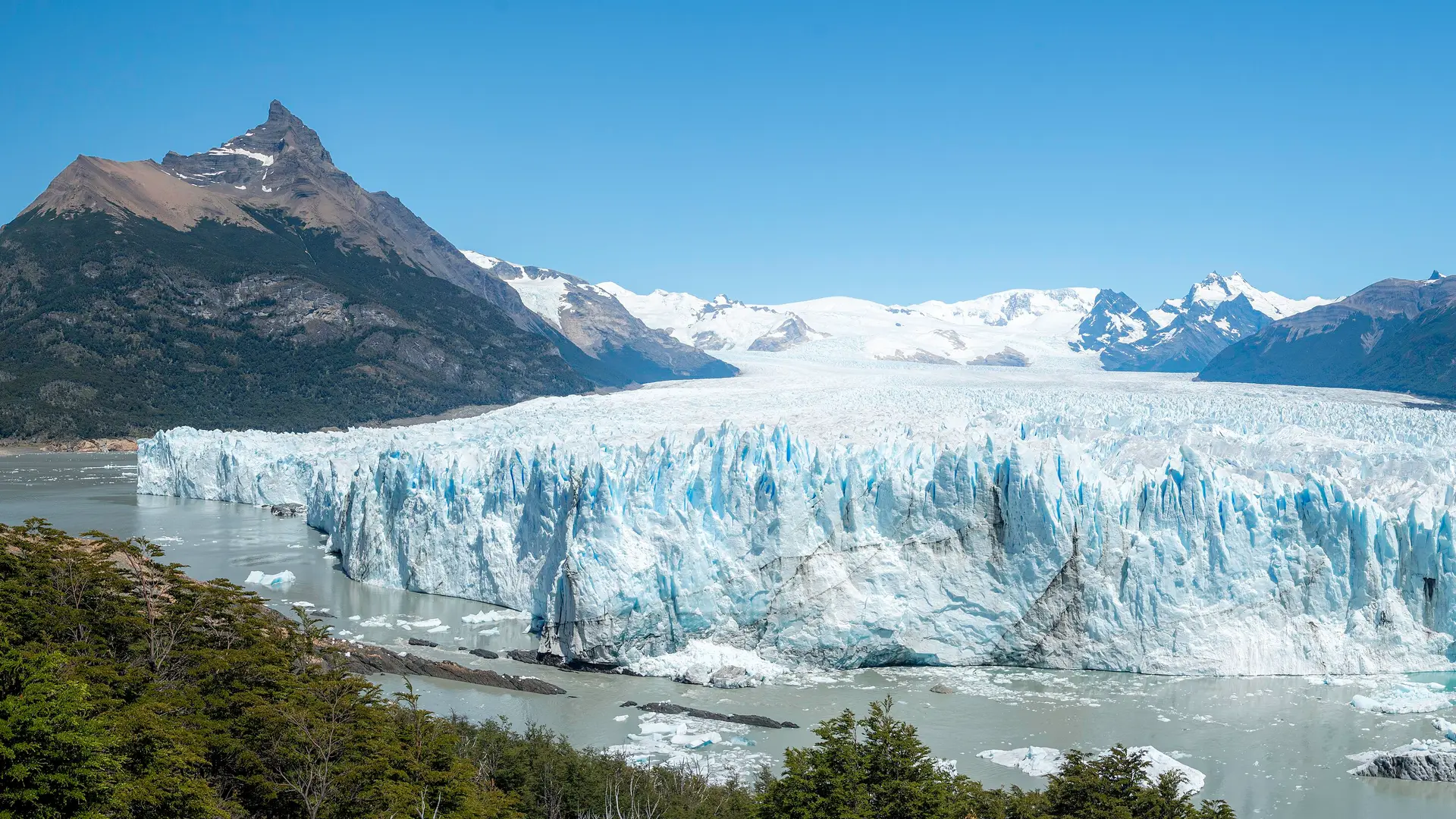
Perito Moreno is one of the most spectacular glaciers on Earth. It flows down from the Southern Patagonian Ice Field, one of the largest bodies of ice outside the poles, and ends in Lago Argentino in a wall of jagged, blue-white ice about 5 kilometers wide and some 70 meters high above the water.
It’s named after Francisco “Perito” Moreno, a 19th-century explorer who helped defend Argentina’s claims in Patagonia. It sits in Los Glaciares National Park, a UNESCO World Heritage Site.
Unlike most glaciers in the world, which are shrinking fast, Perito Moreno stayed remarkably stable for decades, gaining about as much ice as it lost. Recent studies suggest it has begun to retreat. It’s still a powerful, constantly moving river of ice, advancing up to around two meters a day in places.
The rupture
As the glacier pushes forward, it sometimes reaches right across a narrow part of the lake to the opposite shore, the Magellan Peninsula, forming a natural dam. Behind it, the water of the Brazo Rico arm of the lake rises, sometimes by many meters.
Eventually, the water tunnels through the ice, carving out an arch, a giant ice bridge. Over days or weeks, the bridge weakens and then collapses with a huge crash into the water. These ruptures have happened every few years, sometimes at night, sometimes in front of thousands of spectators. They can’t be predicted precisely, but when one is coming, people flock to watch.
How to see the glacier
The walkways. Several kilometers of metal walkways and balconies on the hillside face the glacier directly, at different levels. Take your time and walk them all. Some are right at the waterline, close enough to feel the cold air coming off the ice. Sit, wait, and listen for the cracks.
Boat trips. Short boat trips sail right up to the ice face, as close as is safe, so you can see how enormous it is. Longer cruises on Lago Argentino visit other glaciers such as Upsala and Spegazzini, sailing past icebergs.
Ice trekking. Licensed operators take you across the lake by boat and then onto the glacier itself, wearing crampons. The popular minitrekking is an easy walk of about an hour and a half on the ice, past blue crevasses and ponds, ending with a glass of whisky over glacier ice. The longer Big Ice trek goes much further onto the glacier for fitter, more adventurous visitors. Both have age and fitness limits.
El Calafate
The town of El Calafate, about 80 kilometers away, is the base for visiting. It’s a friendly, touristy little town with cozy restaurants serving Patagonian lamb roasted on spits over a fire, and ice cream made from the calafate berry. Legend says that anyone who eats the berry will return to Patagonia.
From here, many travelers continue to El Chaltén, the “trekking capital,” for hikes beneath Mount Fitz Roy, or cross into Chile to Torres del Paine.
When to go
The main season runs from October to April, the southern spring and summer, with long days and milder weather. December to February is busiest. Autumn (March–April) brings fewer people and colorful forests. The glacier can be seen in winter too, quieter and colder, though some activities don’t run.
The national park charges an entrance fee, higher for foreign visitors. Prices in Argentina change often. Check before you go.
The honest bits
El Calafate is remote and getting there takes time and money. The walkways can be busy in peak season, the wind can be bitter, and you may wait a long time between big collapses.
But sit on a quiet balcony with a flask of coffee, listening to the ice creak and groan, and watch a blue tower crash into the lake. You’re looking at a frozen river that’s been flowing toward you for hundreds of years, and it’s still moving.
Perito Moreno Glacier: questions people ask
Can you walk on Perito Moreno Glacier?
Yes, with a licensed tour. 'Minitrekking' tours fit you with crampons for a short walk on the ice. Longer 'Big Ice' treks go deeper onto the glacier. Both have age and fitness limits, so check before you book.
When does the glacier collapse?
Ice falls from the face all day, often with a sound like thunder. Every few years, the glacier blocks part of the lake, and the water eventually breaks through, collapsing a giant ice bridge in a famous rupture. It can't be predicted precisely.
How do you get to Perito Moreno?
Fly to El Calafate from Buenos Aires (about 3 hours), then drive or take a bus about 80 km to the glacier.