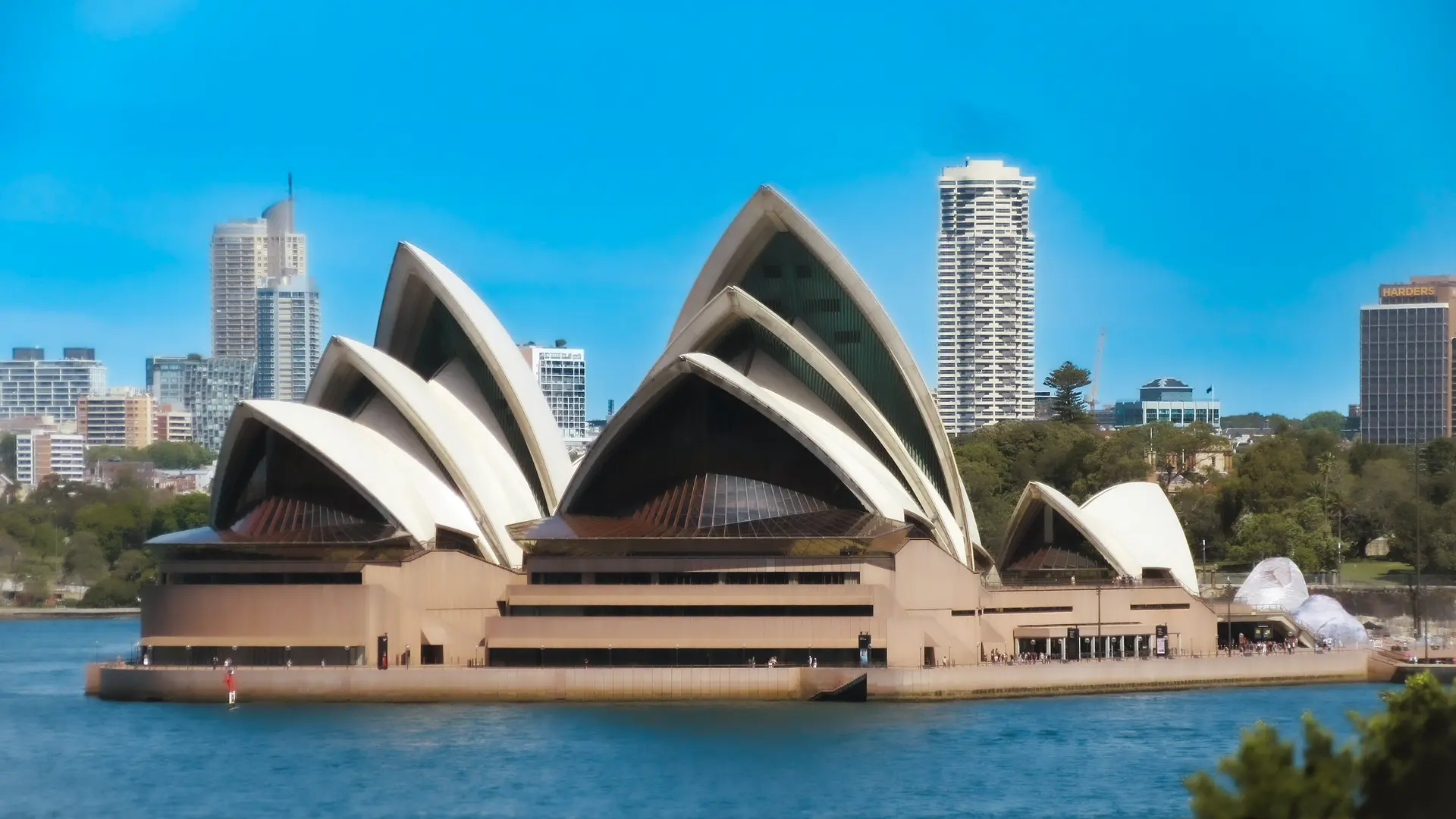
In 1957, an international jury met in Sydney to choose a design for a new opera house. There were more than 200 entries. One was a set of loose, almost sketchy drawings from a young, little-known Danish architect named Jørn Utzon, showing white shells like sails, or seashells, rising from a platform on the harbor.
A famous story says it had already been put on the rejected pile when one of the judges, the Finnish-American architect Eero Saarinen, arrived late, went through the discarded entries, pulled it out, and declared it the winner.
Whether or not that’s exactly how it happened, Utzon won. And then the trouble began.
A building nobody knew how to build
Utzon’s drawings were beautiful, but no one knew how to actually build those soaring, curved shells. Construction began in 1959, before the engineering was solved. For years, Utzon and the engineers at Ove Arup struggled.
The breakthrough came when Utzon realized that all the shells could be cut from the surface of a single sphere. That meant they could be built from standard, prefabricated pieces. It was an elegant solution, and you can see a model of it on site.
But costs soared, from an estimated AUD 7 million to more than AUD 100 million. A new state government clashed with Utzon over money and control, and stopped paying him. In 1966 he resigned and left Australia. He never returned to see his building finished.
Other architects completed the interiors, and Queen Elizabeth II opened the Opera House in 1973. In the 1990s, Sydney asked Utzon to return as an adviser. He agreed to help but never came back in person. He designed a renovation of one room, now called the Utzon Room, from Denmark. In 2007 the Opera House became a UNESCO World Heritage Site, one of the few buildings ever listed while its architect was still alive. He died the following year.
Sails of tiles
The shells are covered in more than one million glazed white and cream tiles, made in Sweden. Look closely and you’ll see they’re arranged in a subtle chevron pattern, with matte and glossy tiles mixed so the roof glows rather than glares. The tiles are almost self-cleaning: the rain washes them down.
Visiting
Guided tours run every day, taking you into the foyers and halls, including the main Concert Hall with its huge organ, and telling the full story of Utzon and the building. Backstage tours go behind the scenes early in the morning.
See a performance. Opera, ballet, symphony concerts, theater, comedy and contemporary music all play here. Even a cheap seat in the Concert Hall is an experience. Have a drink at the Opera Bar on the waterfront before the show, with the Harbour Bridge lit up across the water.
The best views
- Mrs Macquarie’s Chair, a sandstone seat carved for a governor’s wife in the Royal Botanic Garden, with the Opera House and Harbour Bridge together. It’s spectacular at sunrise.
- The Manly ferry from Circular Quay: a cheap 30-minute ride across the harbor with stunning views as you pull away.
- The Sydney Harbour Bridge: walk across, or do the BridgeClimb to the top of the arch.
- The Royal Botanic Garden foreshore walk.
Big nights
- Vivid Sydney (usually May–June): the sails become a canvas for huge projected artworks at night.
- New Year’s Eve: the harbor fireworks around the Bridge and the Opera House are among the most famous in the world. Arrive very early for a good spot.
When to go
Sydney is pleasant year-round. Spring (September–November) and autumn (March–May) are particularly lovely. Summer is hot and busy with beach weather. Winter is mild and cool, with Vivid Sydney.
The honest bits
The Opera House is surrounded by crowds at Circular Quay, and the tours can feel short for the price. Show tickets for popular performances sell out. Some find the inside less magical than the outside.
But sit on the steps as the sun goes down, the shells turning pink and gold over the water, and the ferries drifting home across the harbor. A young architect drew this almost as a dream, and then had to leave before it was finished. Now it’s one of the most loved buildings on Earth.
Sydney Opera House: questions people ask
Can you go inside the Sydney Opera House without seeing a show?
Yes. Guided tours run daily in several languages, taking you into the main halls and foyers and telling the story of the building. There are also backstage and architectural tours.
Where is the best view of the Opera House?
From Mrs Macquarie's Chair in the Royal Botanic Garden (with the Harbour Bridge behind), from the Manly ferry as it leaves Circular Quay, and from the Harbour Bridge itself.
What is Vivid Sydney?
A festival of light usually held in May and June, when images and animations are projected onto the Opera House sails at night.