The American writer Mark Twain visited in 1896 and wrote that Benares, as it was then known, was “older than history, older than tradition, older even than legend.”
He wasn’t exaggerating much. Varanasi, on the banks of the Ganges, is one of the oldest continuously inhabited cities in the world. People have been coming here to pray, to bathe, to study, and to die, for at least three thousand years.
At dawn, you’ll see why it still draws them.
The city of light
Hindus believe Varanasi, also known as Kashi, “the city of light,” is the home of the god Shiva, and that the Ganges (Ganga), which flows past it, is a goddess who washes away sins. To die in Varanasi, and have your ashes scattered in the river, is believed to free your soul from the cycle of rebirth, a state called moksha.
So people come from all over India: pilgrims, holy men, families, and the old and sick, who come here at the end of their lives.
The riverbank is lined with ghats, more than 80 sets of stone steps leading down to the water, each with its own temples, stories and purpose. On the ghats, life plays out in public: people bathing and praying, priests performing rituals, washermen slapping laundry on the stones, boys playing cricket, cows wandering, and holy men with ash-covered bodies meditating in the sun.
Sunrise on the river
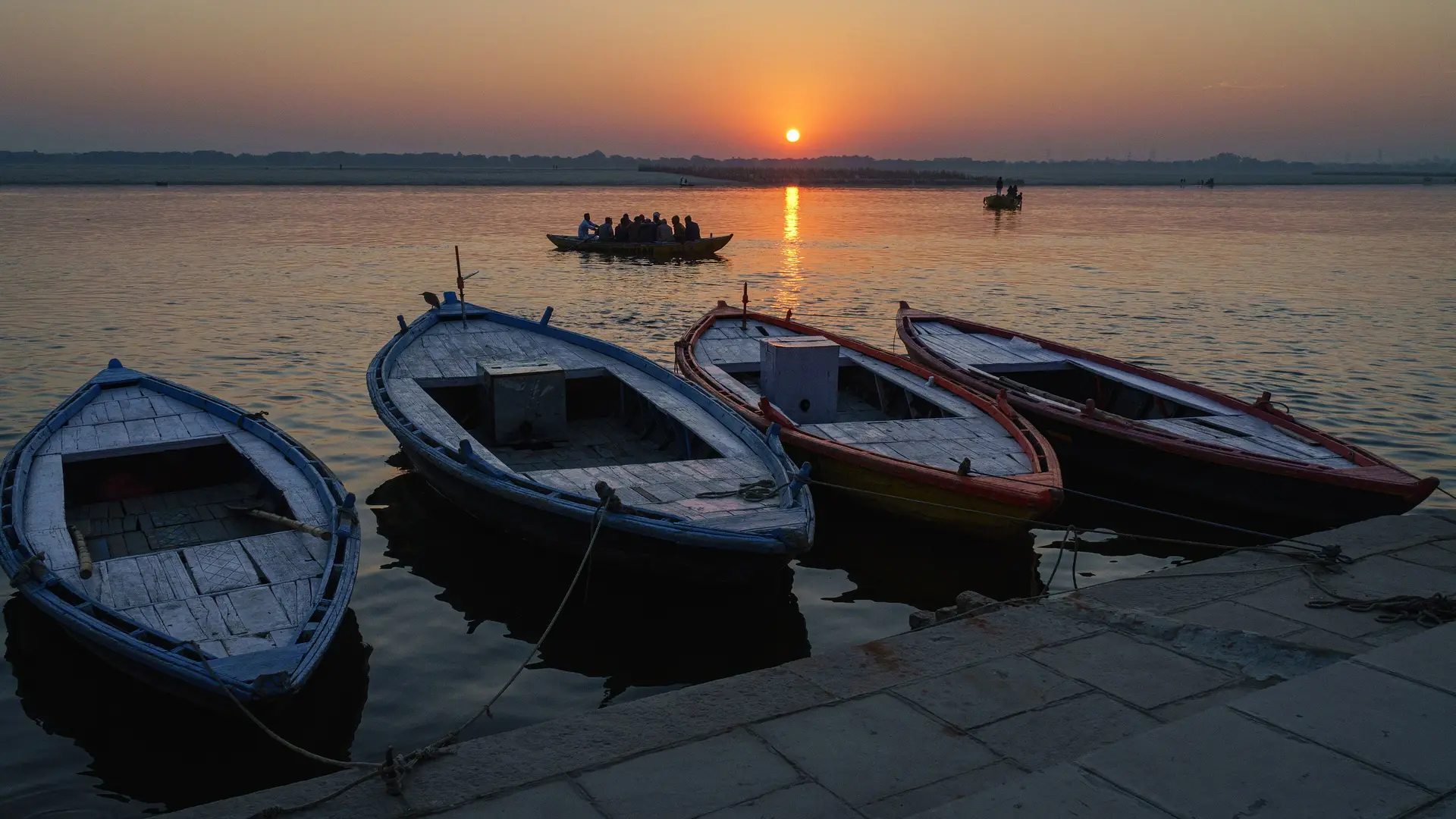
The best way to see Varanasi is from a boat at sunrise. Hire a rowing boat in the dark at one of the ghats. As the sun comes up red over the far bank, you drift along the river past the whole city: pilgrims taking their holy dip, chanting, offering marigolds and small clay lamps to the river, yoga on the steps, and the palaces and temples of the ghats glowing gold. Buy a little leaf boat with a candle and flowers, make a wish, and set it afloat on the river.
The Ganga Aarti
Every evening at Dashashwamedh Ghat, priests in saffron robes perform the Ganga Aarti, a ceremony of light for the river goddess. In perfect unison, they swing great multi-tiered brass lamps blazing with fire, with clouds of incense, ringing bells, conch shells and chanting, while thousands of people watch from the steps and from boats packed together on the water.
It’s loud, smoky, crowded and unforgettable. Arrive early for a good spot, or watch from a boat.
The burning ghats
At Manikarnika Ghat, cremations take place 24 hours a day, as they have for centuries. Bodies wrapped in cloth and marigolds are carried down through the lanes on bamboo stretchers, dipped in the Ganges, and burned on wooden pyres along the riverbank, tended by the Dom caste who have done this work for generations. The sacred fire here is said never to have gone out.
It’s one of the most intense and moving sights in the world. Visitors are allowed to watch quietly from a respectful distance.
- Don’t take photos of the cremations.
- Be respectful: this is a place of grief.
- Be wary of “guides” asking for money for wood “for the poor.”
Beyond the ghats
- The old city lanes: a maze of narrow alleys behind the ghats, full of shrines, shops, sweet-sellers and cows.
- Kashi Vishwanath Temple, the city’s most sacred temple, dedicated to Shiva.
- Sarnath, about 10 kilometers away, where the Buddha gave his first sermon after his enlightenment. It’s peaceful, with ruins, a great stupa and a museum holding the famous Lion Capital of Ashoka, India’s national emblem.
- Banarasi silk: the city’s weavers make some of India’s most famous silk saris, woven with gold and silver thread.
Eat: creamy lassi in clay cups, kachori for breakfast, and Banarasi paan, a betel-leaf digestive famous across India.
When to go
October to March brings pleasant days and cool, misty mornings. Dev Deepawali, at the full moon in November, sees the ghats lit by hundreds of thousands of clay lamps, until the whole riverbank glows. Summer is very hot, and in the monsoon (July–September) the river rises and floods the lower ghats.
The honest bits
Varanasi is intense: crowded, noisy, dirty in places, with touts, beggars, persistent boatmen and a lot of cows. The sight of cremations can be confronting. Many travelers find it overwhelming at first.
But sit on the steps of a quiet ghat at dawn, as the mist lifts off the river, a bell rings somewhere, a man pours water from a brass pot into the Ganges and closes his eyes in prayer. You’re watching a scene that has played out on these steps for three thousand years.
Varanasi: questions people ask
What is the Ganga Aarti?
A nightly Hindu ceremony of light held on the riverbank, especially at Dashashwamedh Ghat. Priests swing great brass lamps in unison, with chanting, bells and incense. Watch from the steps or from a boat on the river.
Can you visit the burning ghats?
Yes, respectfully, at Manikarnika and Harishchandra ghats, where cremations take place day and night. Don't photograph the cremations, keep a respectful distance, and be wary of people asking for 'donations' for wood.
When is the best time to visit Varanasi?
October to March. Dev Deepawali, on the full moon in November, is spectacular, with the ghats lit by countless lamps. Summer is very hot, and in the monsoon the river floods the lower ghats.