In the 9th century, a young woman named Fatima al-Fihri arrived in Fes with her family from Kairouan, in present-day Tunisia. When her father, a wealthy merchant, died, she and her sister inherited his fortune.
Fatima decided to spend her share building a mosque, one that would also be a place of learning. Tradition says she fasted every day until it was finished. It was founded in 859, and it grew into the University of al-Qarawiyyin, which UNESCO and the Guinness World Records recognize as the oldest existing, continually operating university in the world.
More than eleven centuries later, it’s still there, in the heart of the medina, its green-tiled roofs hidden among the rooftops of the city Fatima helped make famous.
A medieval city that never stopped
Fes el-Bali, the old walled city of Fes, was founded in 789 by Idris I and expanded by his son, Idris II. It became one of the great centers of Islamic learning, trade and craftsmanship, and Morocco’s capital for centuries.
Today it’s one of the largest car-free urban areas in the world, a labyrinth of thousands of narrow lanes, alleys and dead ends behind high walls. Donkeys and handcarts carry the goods. People still live and work here as they have for centuries: coppersmiths hammering trays, weavers at their looms, bakers carrying trays of bread to communal ovens. The whole medina is a UNESCO World Heritage Site.
It is noisy, crowded, confusing and absolutely alive.
What to see
The Chouara Tannery. From the terraces of the surrounding leather shops, you look down on a honeycomb of stone vats filled with white, brown, red and yellow liquid, where workers stand knee-deep, treating and dyeing hides by hand, much as they have for centuries. The smell is powerful. You’ll be handed a sprig of mint to hold under your nose. The shopkeepers will expect you to look at their leather afterwards, but you don’t have to buy.
Al-Qarawiyyin. Non-Muslims can’t go inside the mosque-university, but you can glimpse its courtyard through the doors. Its restored library is among the oldest in the world.
The madrasas. The Bou Inania and Al-Attarine madrasas, 14th-century schools for religious students, are open to visitors and are masterpieces of Moroccan decoration: carved cedar, intricate tilework (zellij) and lace-like carved plaster around peaceful courtyards with fountains.
Bab Bou Jeloud. The famous Blue Gate, decorated with blue tiles on the outside and green on the inside, the main entrance to the medina.
The Nejjarine Museum, a beautiful old caravanserai housing a museum of woodwork, with a rooftop café.
The souks: lanes of spice sellers, slipper makers, metalworkers and fabric shops, and the henna souk, a small, shady square.
Getting lost, safely
You will get lost in Fes. Accept it. That’s part of the fun.
- Hire an official guide for your first half day to get your bearings. Your riad can arrange one.
- Ignore unofficial guides offering to help, or telling you a street is “closed.” A polite, firm “no, thank you” works.
- Use an offline map, though GPS can be unreliable in the narrow lanes.
- If you’re lost, ask a shopkeeper, not a passing young man.
Stay in a riad
A riad is a traditional house built around an inner courtyard or garden, often with a fountain, tiled walls and a roof terrace. From the street, there’s just a plain door in a blank wall. Inside, it’s a hidden paradise. Many in the medina have been restored as small guesthouses. Having breakfast on the roof terrace as the call to prayer echoes across the city is unforgettable.
Eat
Try pastilla, a Fes specialty: a sweet and savory pie of pigeon or chicken with almonds, cinnamon and sugar. Also harira soup, tagines and couscous (traditionally on Fridays), fresh bread from the communal ovens, and endless glasses of mint tea.
When to go
Spring (March–May) and autumn (September–November) are most pleasant. Summer is very hot. Winter is cool and sometimes rainy, but quiet.
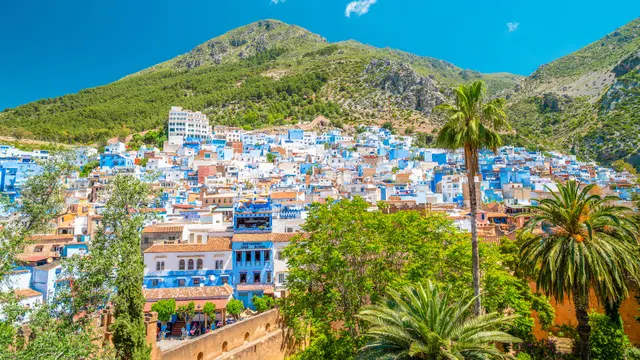
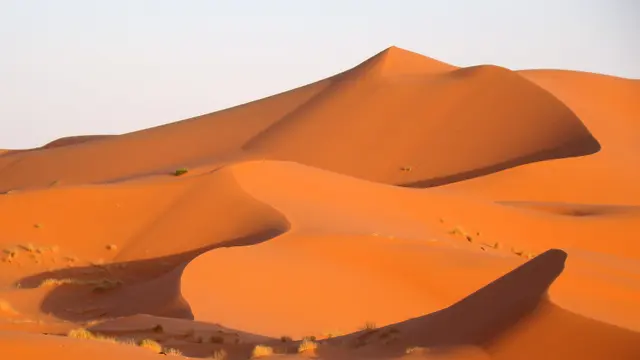
Fes is about 2.5 hours by train from Rabat and about 4 from Casablanca, and has its own airport. Many travelers continue to the blue town of Chefchaouen or the dunes of Erg Chebbi.
The honest bits
The medina can be overwhelming: crowds, noise, smells, donkeys and persistent touts. It’s easy to get lost and frustrated. Shopkeepers are skilled at selling. Bargain with good humor.
But climb up to your riad’s roof terrace at dusk, as the call to prayer rises from hundreds of minarets at once, the swallows wheel over the rooftops, and the city that Fatima al-Fihri helped make famous settles into evening.
The Medina of Fes: questions people ask
Do I need a guide in the Fes medina?
It's not required, but a licensed guide for your first half day helps a lot. The medina is a maze, and an official guide also keeps unofficial 'guides' away. Book through your riad or the tourist office.
Can non-Muslims visit the Al-Qarawiyyin mosque?
Non-Muslims can't enter the mosque, but you can glimpse its courtyard through the doorways. The nearby Al-Attarine and Bou Inania madrasas are open to visitors and are just as beautiful.
What is the best way to see the tanneries?
From the leather shop terraces overlooking the Chouara tannery. You'll be offered a sprig of mint to hold under your nose. Go in the morning, when the dye pits are busiest.