It’s 2 a.m. on a July night, and a river of headlamps is winding up the side of a volcano.
You’ve slept for a few hours in a mountain hut on the slope, packed into a row of futons with strangers, and now you’re climbing again over loose volcanic gravel in the cold and dark. The air is thin. Your legs ache. At every station, people stop to buy hot drinks and get a stamp burned into their wooden walking sticks.
Just before 4:30, you reach the crater rim at 3,776 meters. You find a rock, pull on every layer you have, and wait. Below you, a sea of clouds stretches to the horizon. Then the sun bursts up out of it, gold and enormous. People cheer and shout “Banzai!” The Japanese have a word for this sunrise from the summit: goraikō, “the arrival of the light.”
The sacred mountain
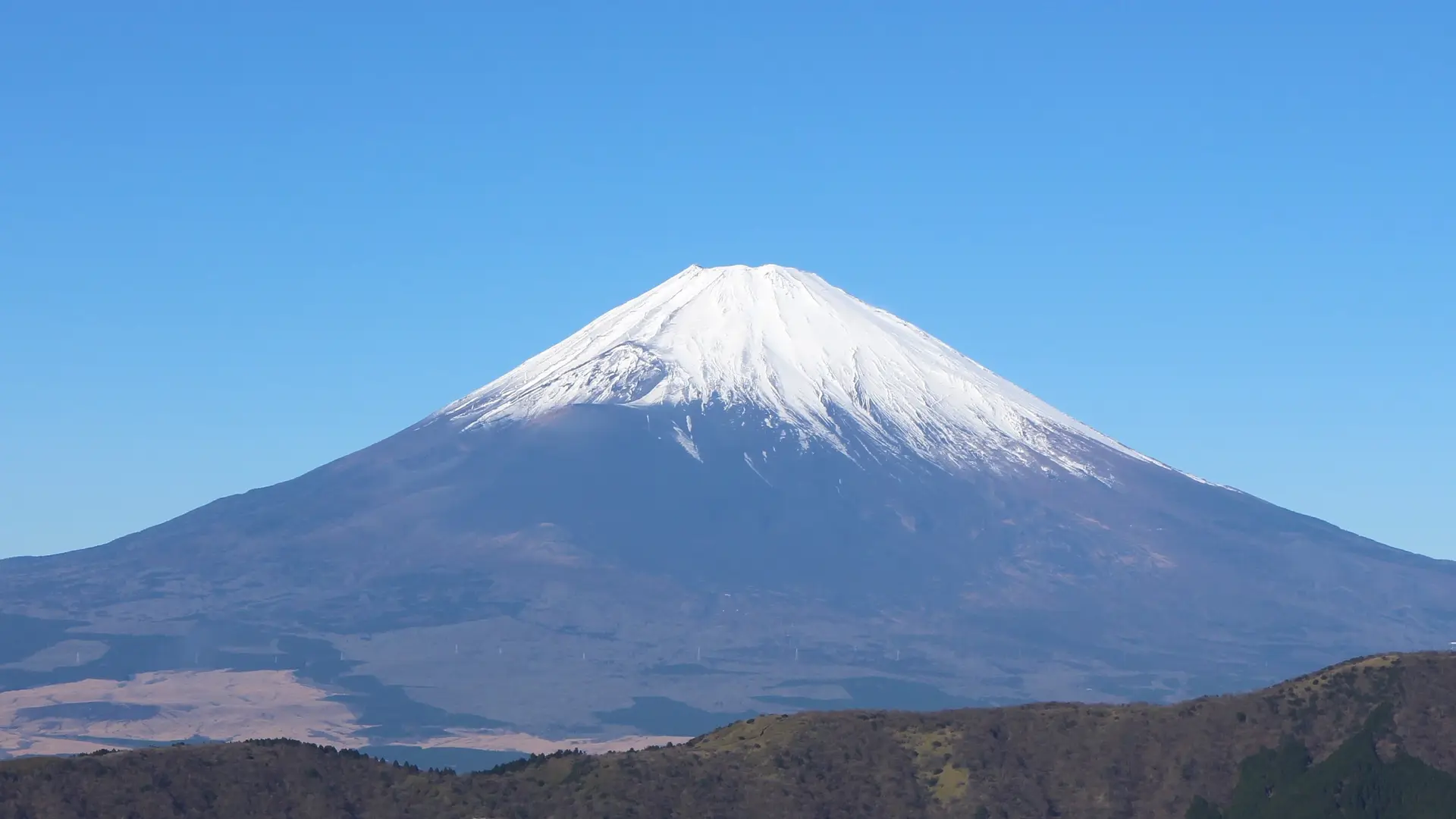
Mount Fuji is Japan’s highest mountain, an almost perfectly symmetrical volcanic cone rising alone from the plains about 100 kilometers south-west of Tokyo. It last erupted in 1707, scattering ash over Edo (now Tokyo). It’s still considered active.
For more than a thousand years it has been sacred. In Shinto belief, the mountain is home to the goddess Konohanasakuya-hime, the blossom princess, who is honored in shrines at its foot. Pilgrims in white robes climbed it for centuries. Women were banned from the summit until 1872.
Fuji has also inspired artists like no other mountain. Katsushika Hokusai’s series Thirty-six Views of Mount Fuji (1830s) includes The Great Wave off Kanagawa, with tiny Fuji sitting in the hollow of a giant wave. It’s probably the most famous Japanese artwork in the world. In 2013, Fuji was listed by UNESCO as a cultural site, “a place of worship and source of artistic inspiration.”
Seeing Fuji: the best viewpoints
Most visitors don’t climb Fuji. They come to look at it.
The Fuji Five Lakes (Fujigoko), on the north side, are the classic area.
- Lake Kawaguchiko: Fuji reflected in the water, with lakeside parks, ryokan with hot-spring baths and mountain views, and a ropeway up to a viewpoint.
- Chureito Pagoda: climb about 400 steps through Arakurayama Sengen Park to see the five-story red pagoda with Fuji rising behind it. In cherry blossom season (usually April here), it’s Japan’s most famous postcard.
- Oishi Park, with flower fields facing the lake and the mountain.
- Lake Motosu: the view on Japan’s 1,000-yen note.
Hakone, to the south-east, is a hot-spring resort area famous for the red torii gate standing in Lake Ashi, sightseeing “pirate ships,” a ropeway over the steaming volcanic valley of Owakudani, and black eggs boiled in the hot springs, which are said to add seven years to your life. Fuji appears over the lake on clear days.
From the train. On a clear day, the bullet train from Tokyo to Kyoto or Osaka passes close to Fuji. Sit on the right side (seat E) going west.
Diamond Fuji. A few times a year, from certain places, the sun rises or sets exactly over the summit, and photographers line up to catch it.
When Fuji shows itself
Fuji is shy. It’s often hidden by clouds or haze, especially in summer. Your best chances are:
- Winter (November to February): crisp, clear mornings and a snow cap. It’s the most visible season.
- Early mornings, any time of year. Clouds often build up by midday.
Check the forecast and live cameras, and keep your plans flexible.
Climbing Fuji
- Season: roughly early or mid July to 10 September, when trails and huts are open. Outside this period, climbing is dangerous and discouraged.
- Trails: four main routes. The Yoshida Trail from the north is the most popular, with the most huts.
- Rules have tightened in recent years to tackle overcrowding and “bullet climbing” (rushing up overnight without rest). There are now trail fees, daily caps and gate closing times. Check the official climbing site, and book a mountain hut.
- What it’s like: most people start in the afternoon, sleep a few hours in a hut, then climb before dawn for sunrise. It’s not technical, but it’s long, steep, crowded and cold at the top, often near freezing even in August. Altitude can be an issue.
There’s a Japanese saying: “A wise man climbs Fuji once. Only a fool climbs it twice.”
The honest bits
The mountain can hide for days. Popular viewpoints are crowded, and the area has struggled with overtourism. In 2024, one town even put up a screen to stop crowds gathering outside a convenience store with a famous Fuji view. The climb is busy, tiring and cold.
But wake early in a lakeside ryokan, slide open the paper screen, and there it is: perfect, snow-capped, pink in the dawn and reflected in the still lake.
Mount Fuji: questions people ask
When can you climb Mount Fuji?
The official climbing season runs from early or mid July to around 10 September, when the trails and mountain huts are open. Climbing outside the season is dangerous and strongly discouraged.
Is there a fee to climb Mount Fuji?
Yes. Trail fees, daily caps and gate closing times have been introduced in recent years to manage crowds and safety. Check the official Mount Fuji climbing website before you go and book a mountain hut if you plan to climb overnight.
When is Mount Fuji most visible?
In winter, roughly November to February, on clear, cold mornings. In summer the mountain is often hidden by haze and cloud. Early morning is always your best chance.
What's the best place to see Mount Fuji?
Lake Kawaguchiko and the Chureito Pagoda in the Fuji Five Lakes area, and Lake Ashi in Hakone. On a clear day you can also see it from the bullet train between Tokyo and Osaka, on the right side heading west.