On a sunny morning in the year 79, a young Roman named Pliny was staying across the bay from Pompeii with his uncle, the admiral and writer Pliny the Elder. His mother called them outside to look at a strange cloud rising above the mountain.
It was shaped, Pliny later wrote, like an umbrella pine tree: a tall trunk shooting up into the sky and then spreading into branches.
The mountain was Vesuvius. His uncle sailed across the bay to rescue friends, and died on the beach. Over the next day, a towering column of ash and pumice rained down on Pompeii, and then avalanches of searing gas and ash, called pyroclastic surges, swept through the town. Everyone still there died.
Pliny’s letters about that day are the first eyewitness account of a volcanic eruption ever written. And the town he watched disappear lay buried, almost untouched, for 1,700 years.
A town frozen in time
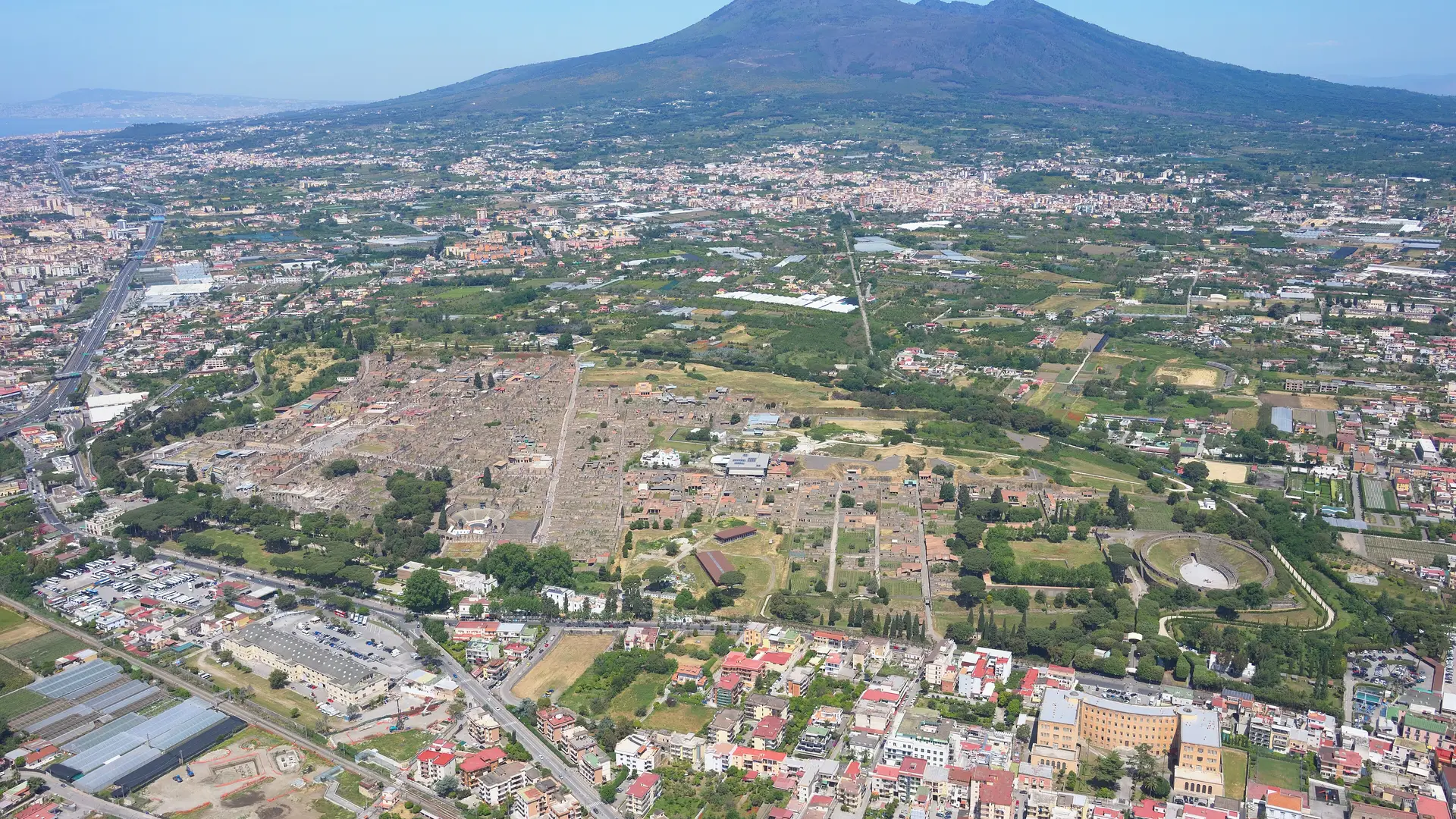
When Pompeii was rediscovered in the 18th century, excavators found a whole Roman town: streets with ruts worn by cart wheels, shops with their counters, bakeries with bread still in the ovens, painted houses, temples, theaters and an amphitheater.
In the 1860s, archaeologist Giuseppe Fiorelli noticed hollow spaces in the hardened ash, left where bodies had decayed. He filled them with plaster, creating haunting casts of people in their final moments: crouching, covering their faces, holding each other. Some casts are on display around the site.
Tradition held that the eruption took place on 24 August. But an inscription discovered in 2018, scribbled in charcoal and dated to mid-October, suggests it may have happened in October instead.
Life in Pompeii
What makes Pompeii unforgettable isn’t just the destruction. It’s the ordinary life frozen in it.
- Graffiti covers the walls: election slogans, adverts for gladiator fights, love notes, insults, jokes and the ancient equivalent of “I was here.”
- Thermopolia, street-food counters with jars set into the stone, where Romans grabbed hot food and wine. Some are still painted with colorful scenes.
- Bakeries with millstones and ovens.
- Houses with gardens, fountains and wall paintings in deep reds, yellows and blacks.
What to see
- The Forum, the town’s main square, with Vesuvius looming behind.
- The House of the Faun, one of the grandest houses, named for its bronze dancing faun.
- The House of the Vettii, the home of two wealthy brothers, with some of Pompeii’s finest frescoes. It reopened in 2023 after a long restoration.
- The Villa of the Mysteries, just outside the walls, with a famous room of life-size paintings of a mysterious ritual on a deep red background.
- The Lupanar, a small brothel with explicit wall paintings above the doors.
- The Amphitheater, the oldest surviving Roman amphitheater, built around 70 BC.
- The Stabian Baths, with stucco ceilings and changing rooms.
- New excavations: digs continue in the area called Regio V, uncovering new frescoes every year, including a 2023 painting of a flatbread that looks a lot like a pizza.
Visiting
- Book named tickets in advance on the official site, about €18–22. Daily numbers are capped.
- Arrive at opening, with water, sunscreen and a hat. There’s very little shade.
- Wear good shoes: the streets are rough, uneven stone.
- Plan a route. The site is huge, about 66 hectares. Pick your highlights, or hire a guide.
Herculaneum and Vesuvius
Herculaneum (Ercolano), a smaller, wealthier town on the other side of Vesuvius, was buried under deep volcanic deposits that preserved even more: wooden beams, doors, furniture, food, and upper floors. It’s quieter and astonishing. Many visitors prefer it.
You can also climb Vesuvius. A road takes you most of the way up, and a path climbs about 30 minutes to the crater rim, with views over the Bay of Naples. Vesuvius is still active, and closely watched.
Getting there
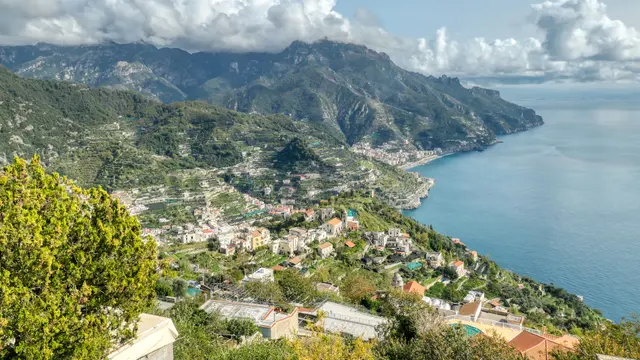
The Circumvesuviana train runs from Naples and Sorrento to Pompei Scavi station, right by the entrance. It’s cheap but crowded. Pompeii pairs well with a stay in Sorrento or on the Amalfi Coast. The National Archaeological Museum in Naples holds many of the best frescoes, mosaics and objects found at Pompeii.
When to go
April–May and September–October are best. Summer is very hot, and winter is quieter, with shorter hours.
The honest bits
Pompeii is big, hot, dusty and often crowded. Many buildings are closed at any one time for restoration, and signage can be confusing.
But walk down an empty side street in the late afternoon, past a painted shop sign and a bit of graffiti that someone scratched two thousand years ago, with Vesuvius rising silently at the end of the road.
Pompeii: questions people ask
Do I need to book Pompeii tickets in advance?
It's strongly recommended. Tickets are now named, and daily visitor numbers are capped. Book on the official site, and bring ID.
How long do you need at Pompeii?
At least 4–5 hours to see the highlights. The site is huge. A full day lets you explore more, but the heat and lack of shade are tiring.
Is Herculaneum better than Pompeii?
It's smaller, less crowded and even better preserved, with wooden beams, upper floors and carbonized furniture. If you have time, visit both. If you're short of time and hate crowds, Herculaneum is a great choice.