You hear them first: a low, endless grunting, like a thousand frogs. Gnu. Gnu. Gnu.
Then your guide turns the vehicle off the track, crests a low rise, and stops. Below you, the plain is black with animals all the way to the horizon. There are wildebeest, hundreds of thousands of them, with zebra mixed in like stripes in a crowd, all walking slowly in the same direction. The dust rises gold in the morning light. Somewhere in the grass, your guide says quietly, there are lions watching too.
This is the Great Migration, and there is nothing else like it on Earth.
The endless plains
The name Serengeti comes from the Maasai word siringet, meaning “the place where the land runs on forever.” Stand in the southern short-grass plains in the green season and you’ll see why: a flat ocean of grass with nothing but sky.
The national park covers almost 15,000 square kilometers in northern Tanzania, and it’s part of a bigger ecosystem that stretches north into Kenya’s Maasai Mara. It holds one of the greatest concentrations of large animals on the planet: lions, cheetahs, leopards, elephants, giraffes, hyenas, buffalo, hippos and crocodiles. But it’s most famous for the herds.
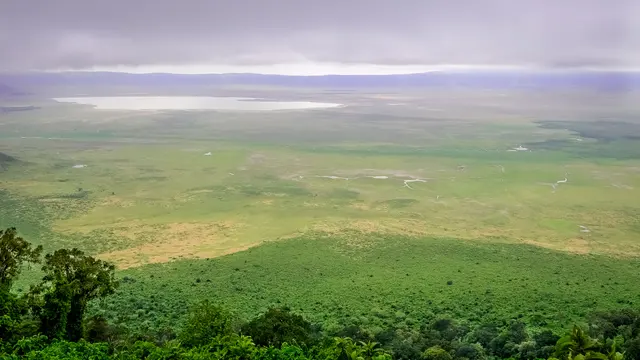
Its protection owes a lot to the German zoologist Bernhard Grzimek and his son Michael, who flew small planes over the plains in the 1950s to count the animals and map their routes. Their film Serengeti Shall Not Die (1959) won an Oscar and helped convince the world the park was worth saving. Michael died in a plane crash during the work. He’s buried at Ngorongoro, near the edge of the crater.
The great circle, month by month
Around 1.5 million wildebeest, plus hundreds of thousands of zebra and gazelle, travel a huge clockwise loop through the year, following the rains and the fresh grass.
- December to March: the herds gather on the short-grass plains of the southern Serengeti and Ndutu. In late January and February comes the calving season, with thousands of calves born every day. They can run within minutes. Predators gather too, and the action is extraordinary.
- April to May: the long rains. The herds move north-west through the central Serengeti. Lush, green and quiet, with lower prices.
- June to July: the herds reach the Western Corridor and cross the Grumeti River, where huge crocodiles wait.
- July to October: the herds push into the northern Serengeti and Kenya’s Maasai Mara, crossing the Mara River in wild, chaotic stampedes. It’s the most famous wildlife spectacle on Earth, and you might wait hours for a crossing, or see five in a day.
- November: the short rains begin, and the herds pour south again to start the cycle over.
The timing changes from year to year with the rain. A good operator will track the herds and put you in the right place.
Beyond the migration
You don’t need the migration to have an incredible safari. The central Seronera area has resident animals all year and is famous for big cats: lions lounging on rocky outcrops called kopjes, leopards draped in sausage trees along the rivers, and cheetahs hunting on the open plains.
A balloon at dawn
Before sunrise, you climb into a basket in the dark. The burners roar, and you lift silently into the pink sky as the sun comes up. For an hour you drift low over the plains, looking down on herds, hippos in the rivers and maybe a pride of lions. Then you land in the grass for a champagne breakfast laid out under an acacia tree. It’s expensive, and worth it.
Where to stay
- Tented camps are the classic choice: proper beds, en-suite bathrooms and canvas walls, with the sounds of the night right outside. Lions roar, hyenas whoop, and at night you’ll need an escort to walk to dinner.
- Mobile camps move a few times a year to follow the migration.
- Lodges are more solid and often have pools, and they’re good for families.
Costs and getting there
A Serengeti safari isn’t cheap. Park fees alone run to more than $70 per adult per day, plus a concession fee for each night you stay inside the park. Add vehicle, guide, lodging and flights.
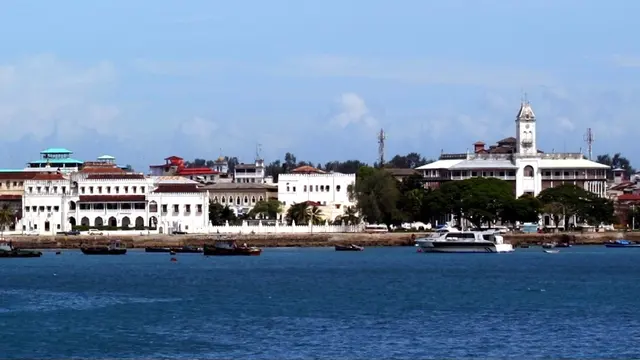
Most trips start in Arusha, near Kilimanjaro International Airport. You can drive in via the Ngorongoro Crater, which takes most of a day of bumpy road, or take a small bush plane to one of the park’s airstrips. Many travelers finish with a few days on the beaches of Zanzibar.
Safari tips
- Bring binoculars, one pair each.
- Wear neutral colors. Avoid bright white, and avoid dark blue and black, which attract tsetse flies.
- Pack layers. Early morning game drives in an open vehicle are cold.
- Be patient. The best sightings often come after an hour of waiting.
- Tip your guide and camp staff. It’s customary and makes a real difference.
The honest bits
The northern river crossings can draw dozens of vehicles jostling for position. Roads are rough and dusty, and days start very early. It’s expensive, and you can’t guarantee what you’ll see.
But on your last evening, as the sun sets red behind an acacia tree, a herd of zebra trots past and somewhere a lion starts roaring. You’ll realize you’ve been living in a nature documentary for days, and you won’t want to leave.
The Serengeti: questions people ask
When is the best time to see the Great Migration?
It depends what you want. January–February for calving in the southern plains, June–July for the Grumeti River crossings in the west, and July–October for the dramatic Mara River crossings in the north.
How many days should I spend in the Serengeti?
At least three full days, ideally four or five, split between two areas: for example the central Seronera region plus wherever the migration is at that time.
Is a balloon safari worth it?
It's expensive, but many people call it the highlight of their trip. You lift off at dawn and drift low over the plains watching herds and predators below, then land for a champagne bush breakfast.
Do you need a tour to visit the Serengeti?
Almost everyone visits with a safari operator and a driver-guide, in a 4x4 vehicle. Guides know the animals, the tracks and the rules, and spotting wildlife is much easier with them.