Every door in Stone Town tells a story.
There are hundreds of them: huge wooden doors, carved with lotus flowers, fish, chains, vines and verses from the Quran, often studded with big brass spikes. The spikes are said to have come from India, where they protected doors from war elephants. There were never any elephants in Zanzibar. People added them anyway, as decoration and as a sign of wealth.
Traditionally, a family’s door was the first part of a house to be built. Its carvings showed who lived behind it: their faith, their trade, their status. Walking the narrow lanes of Stone Town, you’re reading a whole city’s family histories in wood.
The spice island
Zanzibar lies off the coast of Tanzania in the Indian Ocean. For centuries, monsoon winds brought traders from Arabia, Persia and India to its shores, mixing with the Swahili culture of the East African coast. In the 19th century, the Sultans of Oman made Zanzibar their capital, and it grew rich on cloves, spices and, tragically, the slave trade.
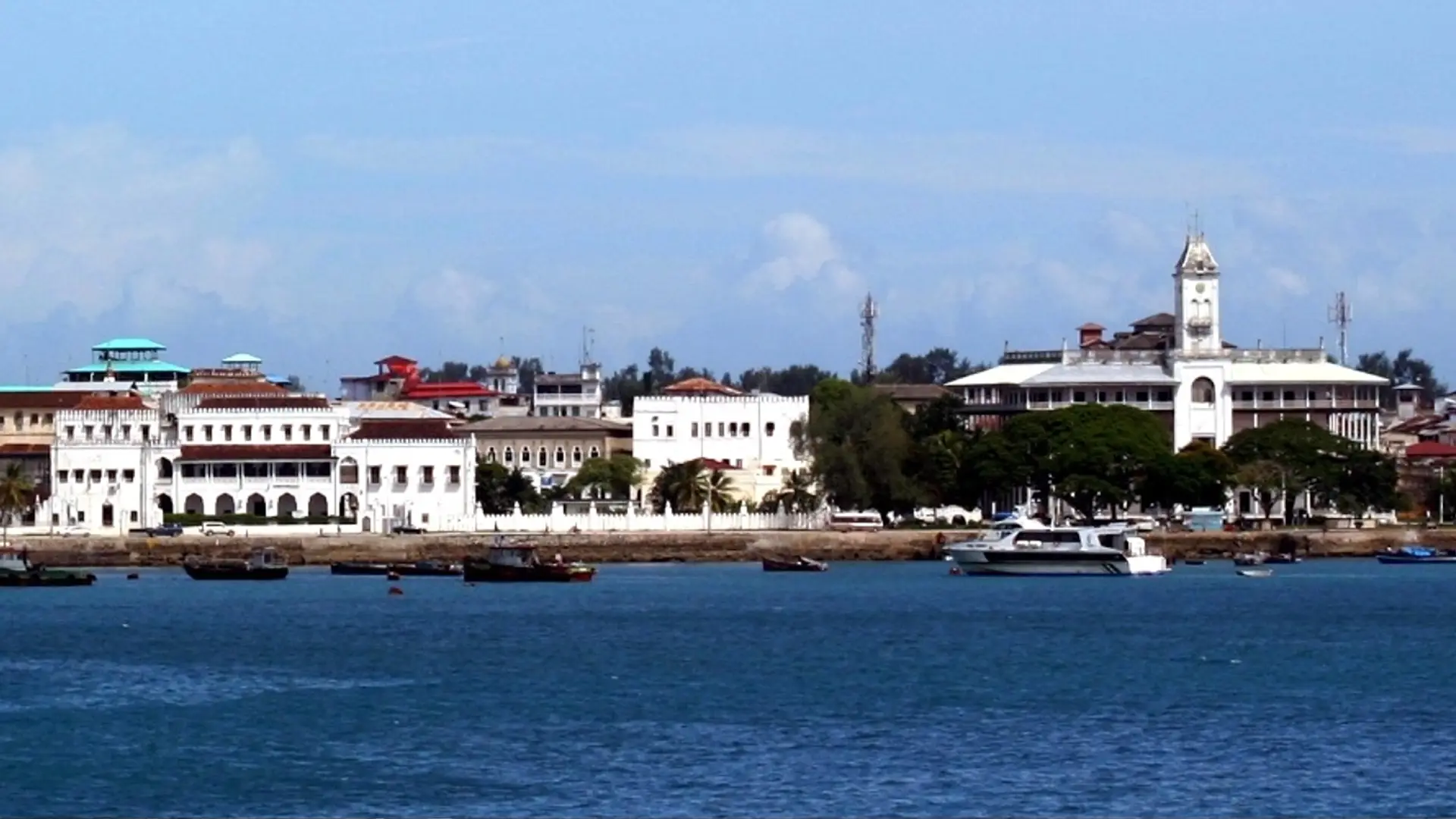
Stone Town, the old heart of Zanzibar City, is a labyrinth of narrow alleys, coral-stone houses, mosques, Hindu temples, churches, carved balconies and hidden courtyards. It’s a UNESCO World Heritage Site.
It’s also the birthplace of Freddie Mercury, who was born here in 1946. You’ll see his face on souvenirs all over town.
What to see
The old slave market. In the 1870s, after the trade was abolished in Zanzibar, the Anglican Cathedral was built on the site of the island’s last open slave market, with its altar placed where the whipping post once stood. Beneath a nearby building, you can see the dark, cramped underground chambers where enslaved people were held. A memorial sculpture of chained figures stands outside. It’s a powerful, sobering visit.
The House of Wonders (Beit al-Ajaib). A grand palace built by the sultan in 1883, said to be the first building in East Africa with electricity and an elevator. Part of it collapsed in 2020 and it has been under restoration.
The Old Fort, the Palace Museum, and the waterfront Forodhani Gardens.
Just wandering: the lanes, the doors, the rooftop cafés and the call to prayer echoing through the alleys.
Forodhani at night
Every evening, the Forodhani Gardens on the waterfront fill with food stalls: lobster, octopus and fish skewers grilled over charcoal, “Zanzibar pizza” (a thin dough folded around fillings and fried), samosas and freshly pressed sugarcane juice with ginger and lime. Kids leap off the sea wall into the water at sunset.
Beyond Stone Town
- Spice tours: visit farms to see (and smell) cloves, nutmeg, cinnamon, vanilla and lemongrass growing.
- Prison Island (Changuu): a short boat ride to an island with a colony of giant tortoises, some over 100 years old.
- A dhow cruise at sunset: sail in a traditional wooden boat as the sun goes down over the town.
- The beaches: Nungwi and Kendwa in the north, and Paje and Jambiani on the east coast, with white sand, turquoise water and kitesurfing.
- Jozani Forest, home of the rare red colobus monkey.
Visiting respectfully
Zanzibar is mainly Muslim and conservative. In Stone Town and villages, cover shoulders and knees, and save swimwear for the beach. During Ramadan, avoid eating and drinking in public during the day.
When to go
June to October (dry and cooler) and December to February (hot and dry) are best. The long rains fall from about March to May.
The honest bits
Stone Town can be hot, crowded and full of persistent touts, and some streets are run down. Prices for tourists can be inflated, so agree on prices first. But sit on a rooftop terrace at sunset, as the dhows sail past and the call to prayer rises from the old town around you, and the spice island will work its magic.
Stone Town, Zanzibar: questions people ask
What should I wear in Stone Town?
Zanzibar is mainly Muslim and conservative. In town, cover shoulders and knees. Swimwear is fine on beaches at resorts, but not in town or villages.
What is the Forodhani Gardens night market?
Every evening, food stalls set up in the waterfront gardens, grilling seafood and making 'Zanzibar pizza' (a stuffed, fried pancake) and fresh sugarcane juice.
How do you get to Zanzibar?
Fly into Zanzibar's international airport, or take the fast ferry from Dar es Salaam (about 2 hours).