On the morning of the summer solstice, around 4:45 a.m., something strange happens on Salisbury Plain.
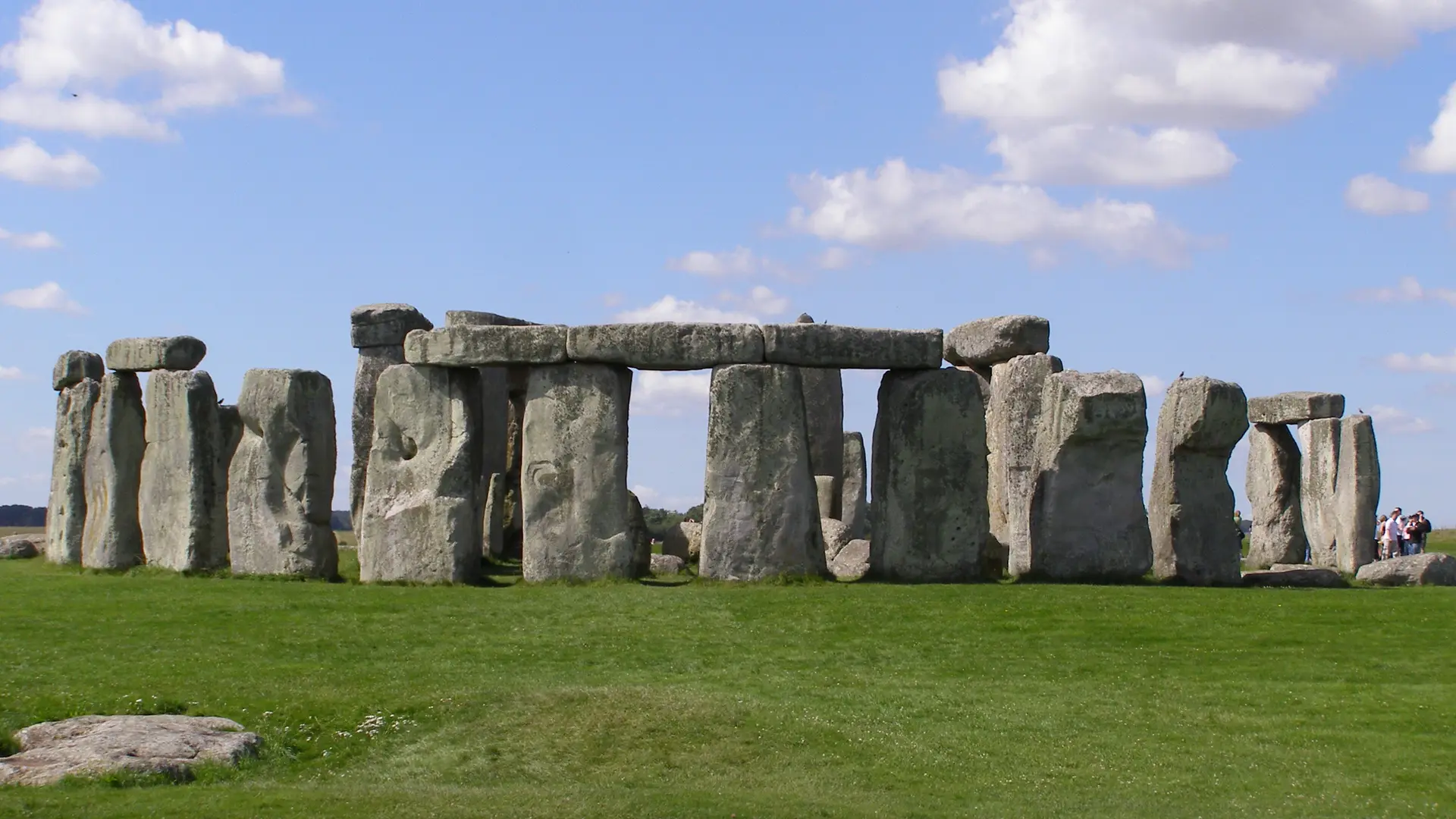
Thousands of people are inside the stone circle, wrapped in blankets, some in robes and antlers, some just in hoodies. There are drums. Someone’s playing a flute. Everyone faces northeast toward a single standing stone outside the circle, the Heel Stone. Then the sky turns orange, and the sun rises right behind it, its first rays reaching into the heart of the monument, just as its builders designed it to, 5,000 years ago.
A huge cheer goes up across the plain.
Built over a thousand years
Stonehenge wasn’t built in one go. It grew over about a thousand years.
- Around 3000 BC, the first monument was a circular ditch and bank, with a ring of pits that may have held the first stones. People were buried here.
- Around 2500 BC came the giant sarsen stones, up to 9 meters tall and weighing about 25 tonnes each, arranged in a circle topped with lintels, and an inner horseshoe of huge trilithons (two uprights and a capstone).
- The smaller bluestones were rearranged several times over the following centuries.
The builders used woodworking joints to fit the stones together: mortise-and-tenon joints to fix the lintels on top and tongue-and-groove joints between them. The lintels are also gently curved to follow the circle. Without metal tools, wheels or writing, it was a staggering achievement.
Where the stones came from
This is one of the most exciting areas of recent research.
- The sarsens came from West Woods, about 25 kilometers north, according to a 2020 study matching their chemistry.
- The bluestones were brought about 225 kilometers from the Preseli Hills in Wales. How they were moved, by land or partly by sea, is still debated.
- And the Altar Stone, the six-tonne slab at the center, was shown in 2024 to come from north-east Scotland, more than 700 kilometers away.
Why go to so much trouble? Nobody knows for sure. Theories include a temple to the sun, a ceremonial burial ground, a place of healing (the Welsh bluestones may have been thought to have healing powers), or a monument uniting different communities. Most likely it meant different things to different generations.
It is aligned with the summer solstice sunrise and the winter solstice sunset, and many archaeologists think midwinter was the more important ceremony, a great feast at the darkest time of the year.
Visiting
- Book timed tickets online, roughly £25–35 depending on the date. Members of English Heritage and the National Trust get in free.
- From the visitor centre, take the shuttle bus or walk about 2.5 kilometers across the fields to the stones. Walking is lovely and passes ancient burial mounds.
- A standard visit follows a path around the circle at a distance.
- The visitor centre has an excellent exhibition, reconstructed Neolithic houses, and a face reconstruction of a man buried nearby 5,500 years ago.
Stone Circle Experience. Small groups can go inside the circle early in the morning or in the evening, outside opening hours. It sells out months ahead. It’s worth it.
The solstices. On the summer and winter solstices, English Heritage usually allows “managed open access” inside the circle for sunrise. It’s free, busy and unforgettable. Check the rules and dates on the official site.
Nearby
- Avebury, about 40 minutes north, has the largest stone circle in the world, so big that a whole village sits inside it. You can walk among and touch the stones freely, and there’s a pub in the middle. Many people prefer it to Stonehenge.
- Silbury Hill, a huge prehistoric mound, and West Kennet Long Barrow, a burial chamber you can walk into.
- Salisbury Cathedral, with the tallest spire in Britain and one of four surviving original copies of the Magna Carta.
- Woodhenge and Durrington Walls, where the builders may have lived and feasted.
When to go
Stonehenge is open year-round. Spring to autumn is best for walking the landscape. Early morning and late afternoon have softer light and fewer people. Bring layers. Salisbury Plain is windy, and the weather changes fast.
The honest bits
Stonehenge is smaller than many people expect, and on a normal visit you can’t get close. It can be crowded in summer, and the busy main road nearby doesn’t help the mood.
But stand on the path as evening falls and the sun sinks low behind the stones, lighting up the great sarsens from behind. Five thousand years ago, people dragged these stones across England, and even Scotland, to stand exactly here.
Stonehenge: questions people ask
Can you walk among the stones at Stonehenge?
Not on a standard visit, which keeps you on a path around the circle. Special 'Stone Circle Experience' visits early in the morning or evening let small groups inside. They sell out months ahead.
What happens at Stonehenge on the solstice?
On the summer and winter solstices, English Heritage usually opens the stones for 'managed open access', letting thousands of people inside the circle to watch the sunrise. Check the official site for dates and rules.
Where did the Stonehenge stones come from?
The huge sarsens came from about 25 km north. The smaller bluestones were brought about 225 km from the Preseli Hills in Wales. The Altar Stone, research in 2024 showed, came from north-east Scotland, more than 700 km away.