At 6 a.m. in November, St Mark’s Square belongs to the pigeons and the street sweepers. Fog hangs over the lagoon. The golden mosaics of the basilica glint in the grey light, and the only sound is the slap of water against the gondolas moored at the edge of the square, bobbing under their blue covers.
Two hours later, thirty thousand people will arrive. But for now, you have Venice to yourself, and it’s the most beautiful city on Earth.
A city that shouldn’t exist
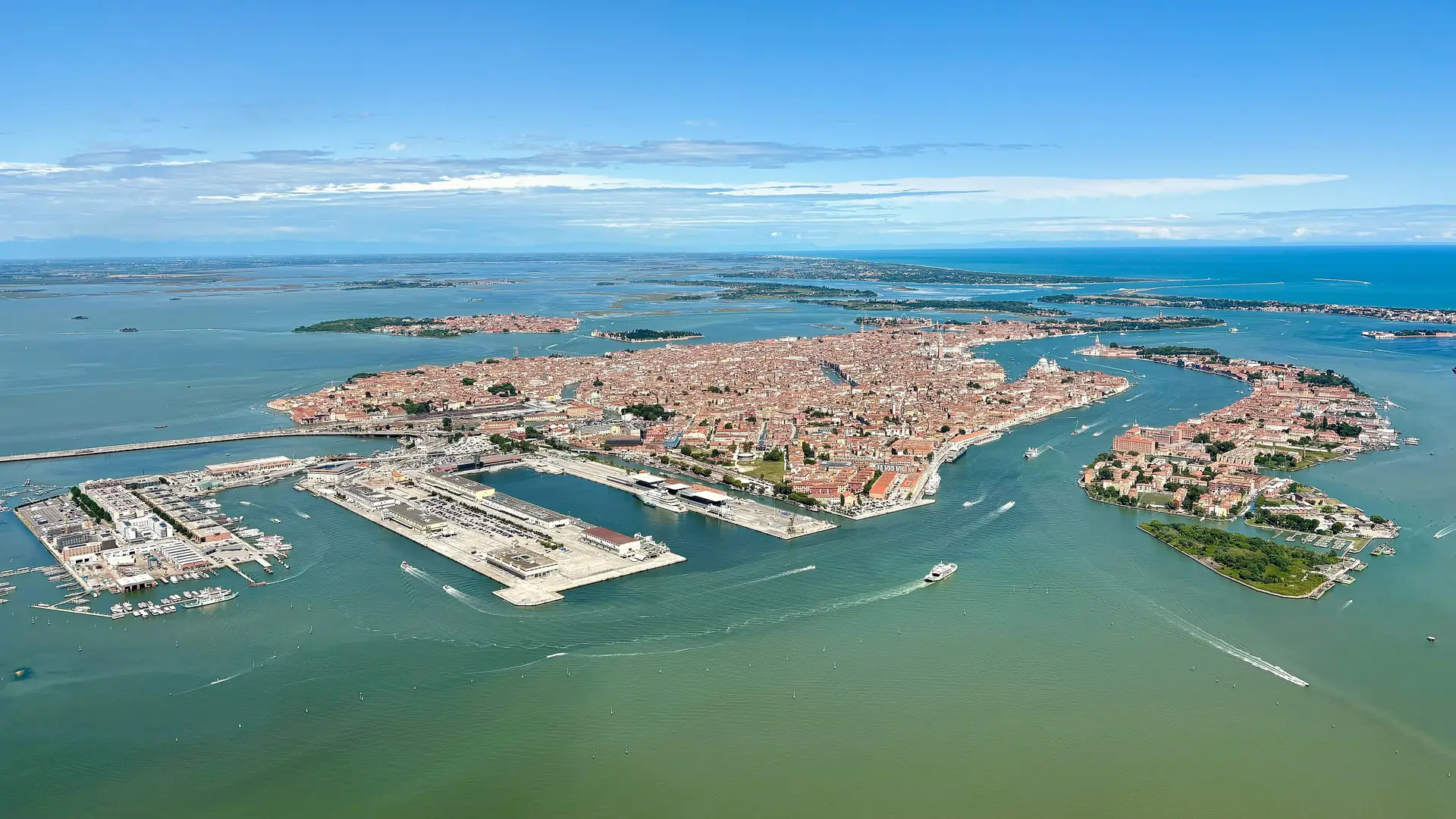
In the 5th and 6th centuries, as the Roman Empire collapsed, people from the mainland fled raiders by escaping into the marshy islands of the lagoon. They drove millions of wooden piles, larch, oak and alder, deep into the mud, laid stone on top, and built.
The wood, sealed in waterlogged clay without oxygen, didn’t rot. It turned almost as hard as stone. Much of Venice still stands on it today: 118 islands linked by around 400 bridges and some 150 canals.
For more than a thousand years Venice was an independent republic, the Serenissima, ruled by an elected Doge. It grew rich on trade with the East, which you can see in the Byzantine domes of the basilica, the spices and silks of its markets, and the palaces lining the Grand Canal. It ended in 1797, when Napoleon arrived.
What to see
St Mark’s Basilica. A glittering cave of gold mosaics, domes and stolen treasures, including four bronze horses taken from Constantinople in 1204. The ones on the facade are copies; the originals are inside. Book a time slot.
The Doge’s Palace. The pink and white palace of the republic’s rulers, with vast council halls covered in paintings by Tintoretto and Veronese. Take the Secret Itineraries tour through hidden offices, torture rooms and the Piombi, the lead-roofed prison cells from which Giacomo Casanova made a famous escape in 1756. You’ll cross the Bridge of Sighs, where prisoners supposedly sighed at their last view of Venice.
The Grand Canal. Ride vaporetto line 1 from the train station to St Mark’s for the slowest, cheapest and best tour of the palaces.
The Rialto. The famous stone bridge, and the fish and produce markets beside it in the morning.
The Accademia for Venetian painting, and the Peggy Guggenheim Collection for modern art in a canal-side palazzo.
The islands. Burano, with its rainbow-colored fishermen’s houses and lace. Murano, famous for glassblowing. And quiet Torcello, the lagoon’s first settlement, now almost deserted, with a cathedral containing stunning 12th-century mosaics.
Gondolas, and how to beat the crowds
A gondola ride costs around €90 for 30 minutes by official daytime rates, more in the evening, per boat. It’s expensive, and many people say it’s worth it once, ideally away from the busiest canals. For two euros, take a traghetto, a gondola ferry, across the Grand Canal standing up like the Venetians do.
To escape the crowds:
- Stay overnight. Day-trippers leave by evening, and the city empties out.
- Wander Cannaregio, Castello and Dorsoduro, residential areas where washing hangs over quiet canals.
- Get up early for St Mark’s and the Rialto.
- Get lost on purpose. It’s the best thing to do in Venice.
Eat like a Venetian
Skip the restaurants with picture menus near St Mark’s. Find a bacaro, a little wine bar, and stand at the counter with a glass of wine (an ombra) or a spritz, ordering cicchetti: small snacks like creamy salt cod on bread, sardines in sweet-sour onions (sarde in saor) and tiny meatballs. Then go on to the next bar.
Access fee, tides and seasons
To manage overtourism, Venice charges day-trippers an access fee on certain peak days. Overnight visitors are exempt. Check the official site for dates and booking.
Acqua alta, high tides that flood low parts of the city, comes mostly in autumn and winter. The MOSE flood barriers now hold back most of them, but you may still see walkways laid out in St Mark’s Square.
Winter is magical: fog, empty squares and low prices. Carnival (February) fills the city with masks and costumes, and crowds. Spring and autumn are lovely but busy, and summer is hot and packed.
The honest bits
Venice is expensive, crowded in high season, and full of cruise and day-tour groups around St Mark’s. Rolling a suitcase over 400 bridges is no joke. Some locals feel the city is being loved to death.
So be a good guest: stay a night or two, eat in local places, leave the busy routes, and come back in winter if you can. Walk along the Zattere at sunset with a gelato, the light going gold on the water, and you’ll see why people have been falling for this city for a thousand years.
Venice: questions people ask
Do I have to pay to enter Venice?
Day-trippers must pay an access fee on certain peak days, mainly spring and summer weekends and holidays. Overnight guests are exempt but need to register through their hotel. Check the official Venice access-fee site for dates.
How much does a gondola ride cost?
Official daytime rates are around €90 for 30 minutes per gondola (up to five people), with higher evening rates. For a quick, cheap taste, take a traghetto gondola ferry across the Grand Canal for a couple of euros.
When is the best time to visit Venice?
Late autumn and winter are quiet, misty and beautiful, outside the Carnival weeks. April–May and October are lovely but busy. July and August are hot and crowded.
What is acqua alta?
Seasonal high tides that can flood low parts of the city, mostly from autumn to winter. The MOSE flood barriers now protect the city from most high tides, but St Mark's Square can still get wet.