Long ago, the Ladin people say, the dwarf king Laurin had a magical rose garden high in the mountains, glowing red with roses.
A prince from a neighboring kingdom came and stole away Laurin’s daughter, and when Laurin was captured, he blamed the roses for giving away his hiding place. So he cursed the garden. No one would ever see it again, by day or by night.
But he forgot about dusk and dawn.
So at sunrise and sunset, when the pale peaks of the Rosengarten (Catinaccio) and the rest of the Dolomites blaze pink, orange and red for a few minutes, the locals say you’re seeing Laurin’s roses bloom again. They call it enrosadira.
Mountains made from ancient reefs
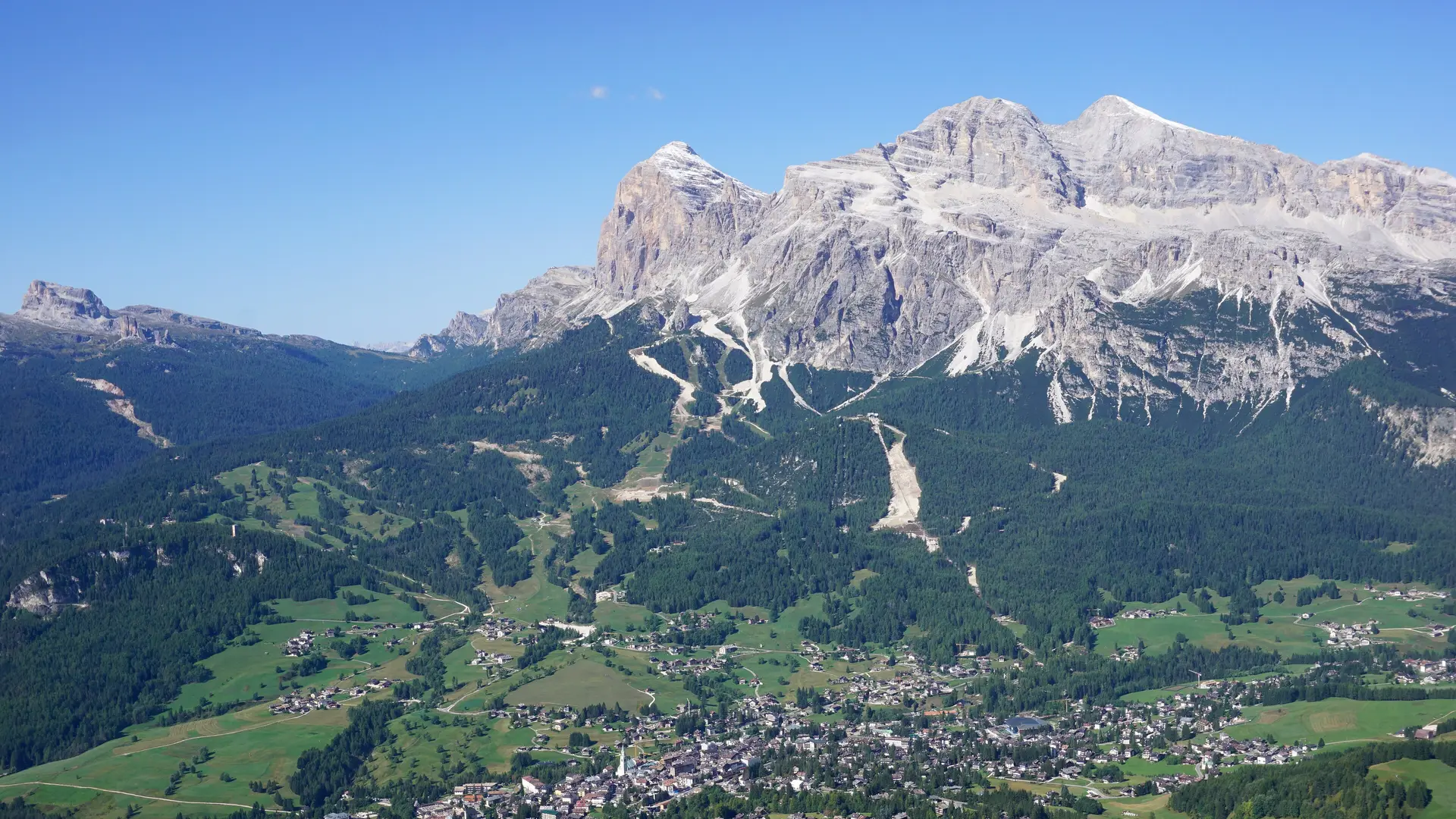
The Dolomites, in north-eastern Italy, look different from the rest of the Alps. Instead of dark, smooth summits, they rise in pale, jagged towers, spires and walls, straight out of green meadows.
That’s because they’re made of dolomite, a type of limestone built up by ancient coral reefs in a tropical sea about 250 million years ago, then lifted and carved by ice. The rock and the mountains are named after the French geologist Déodat de Dolomieu, who studied it in the 1790s. In 2009, the Dolomites became a UNESCO World Heritage Site.
The region is a mix of cultures. In South Tyrol, most people speak German. In some valleys, they speak Ladin, an ancient Romance language. And it’s Italy, so the food is excellent everywhere: dumplings, apple strudel, polenta and pasta, all in one meal.
The highlights
Tre Cime di Lavaredo. Three giant rock towers standing side by side, the symbol of the Dolomites. The loop around them is about 10 kilometers, and fairly easy, with huts for lunch and the best views from the north side at Rifugio Locatelli.
Seceda. A ridge above Val Gardena, reached by cable car, where grassy slopes rise to a sudden knife-edge of jagged peaks. In 2025, local farmers began charging a small fee to cross their land on the most popular path, because of the crowds.
Alpe di Siusi (Seiser Alm). Europe’s largest high-alpine meadow, rolling and dotted with wooden barns, with the peaks of Sassolungo and Sciliar rising above. It’s beautiful for gentle walks and wildflowers in early summer.
Lago di Braies. A blue-green lake under a sheer mountain wall, with wooden rowing boats. It’s extremely popular, and summer road access is limited. Come early or late.
Val di Funes. A green valley with the small church of St Johann in Ranui set against the jagged Odle peaks. It’s one of the most photographed views in the Alps.
Cinque Torri. Five rock towers above Cortina d’Ampezzo, with an open-air museum of First World War trenches. During the war, Italian and Austro-Hungarian soldiers fought here at high altitude, digging tunnels into the rock.
Huts and via ferratas
Part of the magic is staying in a rifugio, a mountain hut, after a day’s walk. Many serve hearty home-cooked meals and local wine, with dormitory beds or private rooms and views straight out to the peaks at sunset. Book ahead in summer.
The Dolomites are also the home of the via ferrata, “iron way”: routes up rock faces with fixed steel cables, ladders and bridges, first built for soldiers in WWI. With a harness and lanyards, or a guide, you can climb places you’d never reach otherwise.
When to go
- Late June to September: hiking season. Huts and lifts open; July and August are busiest.
- September brings stable weather, fewer people and, by late in the month, golden larches.
- December to March: superb skiing on the Dolomiti Superski network, including the famous Sella Ronda loop. Cortina d’Ampezzo co-hosted the 2026 Winter Olympics.
The honest bits
The Dolomites have become very popular, and spots like Seceda, Lago di Braies and Tre Cime can be crowded in summer, with parking limits and fees. Afternoon thunderstorms are common in summer, so start early. Lifts, parking and huts add up.
But sit outside a hut in the evening as the peaks around you turn pink, then red, then purple, while the valley below goes into shadow. King Laurin’s roses are blooming again.
The Dolomites: questions people ask
Where should I stay in the Dolomites?
Val Gardena (Ortisei, Selva) for Seceda and Alpe di Siusi, Alta Badia for meadows and food, Cortina d'Ampezzo for Tre Cime and Cinque Torri, and Val di Funes for the classic church-and-peaks view.
Do I need to book access to Lago di Braies or Tre Cime?
In peak summer, road access and parking at popular spots like Lago di Braies and the Tre Cime toll road are limited or require booking. Check local rules before you go, or use buses.
What is enrosadira?
The pink, orange and red glow that lights up the pale Dolomite peaks at sunrise and sunset. The Ladin word means 'turning pink'.